
.avif)
Pumpkin Spice Cupcakes with Brown Butter Cream Cheese Frosting


My Pumpkin Spice Cupcakes have a moist, thick crumb due to the high ratio of pumpkin puree in the cake batter. On top is my Brown Butter Cream Cheese Frosting, which combines two flavors that pair excellently with pumpkin: tangy cream cheese and deeply toasted brown butter.
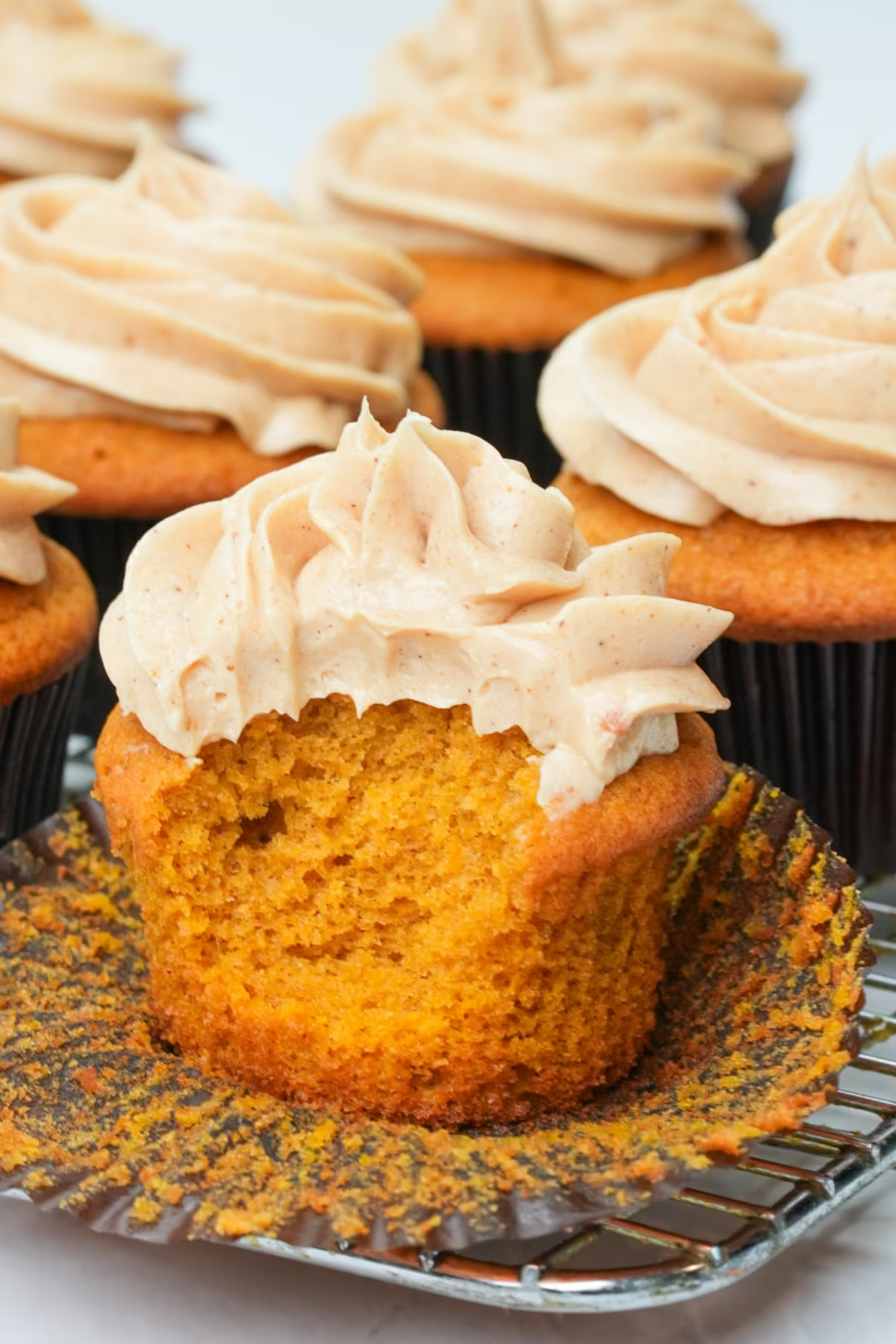
This recipe is a Cakeculator recipe, meaning you can vary the size/quantity of cake you need. In the recipe I’ve included in this post, I used 12 cupcakes. Feel free to modify the recipe as needed using the Cakeculator, selecting “Pumpkin Spice” as the Cake Flavor and “Brown Butter Cream Cheese American Buttercream” as the Frosting Flavor. Be sure to come back here, though, because I’m going to walk you through making the Pumpkin Spice Cake batter, which uses the same mixing steps no matter which pan size you choose.
As for the Brown Butter Cream Cheese Frosting, I have a whole post dedicated to that process. This recipe includes the instructions, but if you need more background or want to see pictures of the process, I highly recommend visiting that page. You don't have to worry about it quite yet, and I'll remind you again as we move through the recipe.
Alright, let’s get started!
What is the flavor/taste/texture of my Pumpkin Spice Cake?
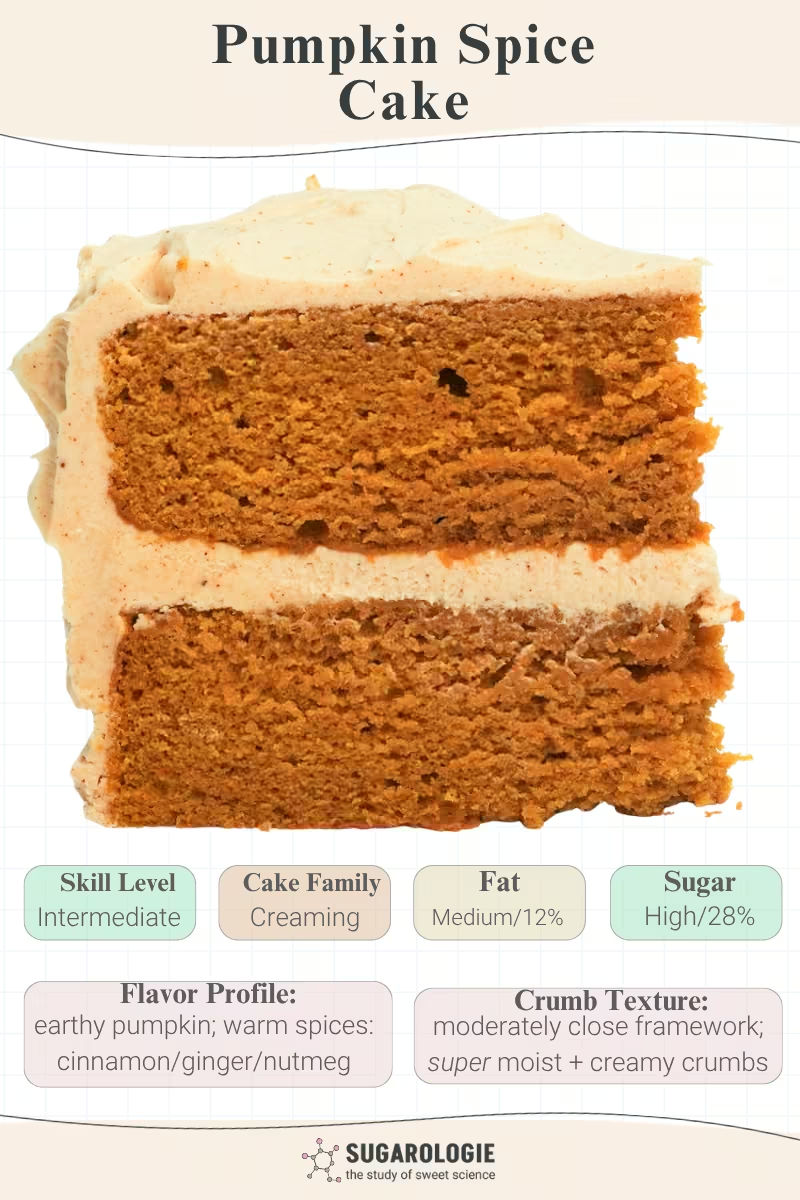
Flavor-wise, you’re going to get an earthy pumpkin paired with a brown-sugar sweet spice in this cake. I don’t use any baking soda, which can alkalize (or essentially neutralize) the acidic pumpkin. Instead, I prefer baking powder, which creates a more characteristic bright pumpkin flavor and a beautiful orange crumb.
The texture of this cake is from the high ratio of pumpkin puree paired with <span class="def-term" data-term="creaming-method">Creaming Mixing Method</span>. This creates a crumb that's super moist and creamy, with a pretty close crumb network. You can see in the demo cake above that the holes are quite small and tight. This is intentional, as I like my pumpkin cakes to be beautifully moist and thick.
Paired with my Brown Butter Cream Cheese Frosting, this pumpkin cake is a dream for pumpkin and Fall dessert people. Your house is going to smell amazing during both recipes - both from the spices in making the cake and when toasting the brown butter for the frosting.
What ingredients will you need to make the Pumpkin Spice Cupcakes?
Pumpkin Spice Cupcake Ingredients
.avif)
ALL-PURPOSE FLOUR, UNBLEACHED provides the main structure of the cupcakes. When flour is hydrated and mixed, it helps the batter set into a cake instead of collapsing. This recipe also contains a relatively large amount of pumpkin puree and eggs, so the flour helps provide support in all that moisture.
BAKING POWDER is the chemical leavener. When it becomes wet and then heats in the oven, it releases carbon dioxide gas. Those gas bubbles expand as the cupcakes bake, helping create a lighter, more aerated crumb.
I prefer to use baking powder instead of baking soda (a potent <span class="def-term" data-term="alkaline">alkaline</span> ingredient that will interact with the acidic pumpkin) as I find baking soda overused in baking recipes, which can dull flavor and color. Baking powder, on the other hand, is specifically formulated to work with itself with no residual alkaline flavor; I find that the pumpkin’s flavor is much more pronounced.
UNSALTED BUTTER provides richness, flavor, and tenderness.
GROUND CINNAMON, GINGER, and NUTMEG are my Trinity o’ Fall Spice Mix. I usually do something along the lines of a 2:1:½ ratio of cinnamon, ginger, and nutmeg, although I vary it a tad depending on the recipe. Sometimes I’ll throw in a pinch of allspice and cardamom, depending on my mood.
SALT and VANILLA EXTRACT are flavor enhancers. Vanilla balances sweetness and makes the pumpkin, brown sugar, vanilla, and spices taste more pronounced. And the salt doesn’t simply make the cake taste salty; in the right amount, it reduces our perception of bitterness while strengthening other flavors.
BROWN SUGAR provides most of the sweetness while also adding moisture and a subtle molasses flavor. Brown sugar is <span class="def-term" data-term="hygroscopic">hygroscopic</span>, meaning it attracts and holds onto water, which helps the cupcakes stay soft after baking. Its molasses flavor also complements pumpkin and warm spices better than plain white sugar would.
EGGS and EGG YOLK provide structure, moisture, richness, and emulsification. As the cupcakes bake, egg proteins set and help support the crumb. Egg yolks also contain <span class="def-term" data-term="lecithin">lecithin</span>, an <span class="def-term" data-term="emulsifier">emulsifier</span> that helps the water and fat in the batter stay evenly dispersed. I tested this batter with various combinations (whole eggs, just egg yolks, etc.) and found that the best combination, without adding too much water (which we need for the pumpkin), is eggs and yolks. I do this pretty often because it’s the perfect combo of structure and moisture.
PUMPKIN PUREE supplies pumpkin flavor, color, and a substantial amount of moisture. Pumpkin also contains starches, fibers, and natural sugars that contribute to the cake’s soft, moist texture. Notice how there are no other liquid ingredients, other than the water coming in from the eggs. The pumpkin is providing the moisture for the cake because I wanted to use so much to flavor it such that no other liquid is needed - no milk, buttermilk, water, etc to dilute the flavor in this cake.
Use canned pumpkin puree for this recipe instead of homemade pumpkin puree. This ensures consistent moisture content, since homemade puree may have a different water/fiber/starch content that will inevitably change the crumb structure. This is particularly important because we use a pretty high ratio of this ingredient in the recipe, so it’s important to use the correct one :)
Brown Butter Cream Cheese Frosting Ingredients
Here are the ingredients you’ll need to make the Brown Butter Cream Cheese Frosting:
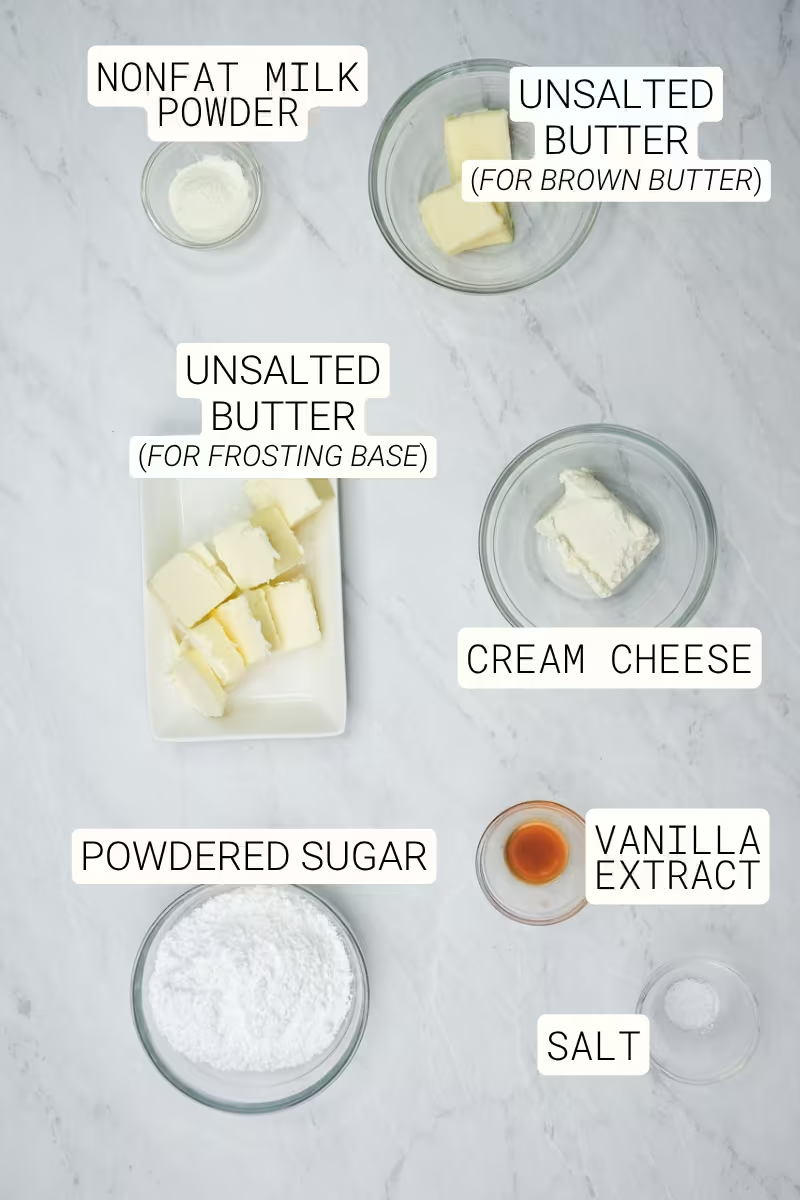
To learn more about each Brown Butter Cream Cheese Frosting ingredient’s function and see my step-by-step photos, I highly recommend popping over to my Brown Butter Cream Cheese Frosting tutorial to get an idea of the process.
Step by step:
STEP 1 | Preheat the oven and prepare the pan.
Move your rack to the middle position. Preheat the oven to 350°F (180°C). Add 12 cupcake liners to a standard-sized cupcake tray.
STEP 2 | Prepare the dry ingredients.
WHY:
Whisking breaks up lumps and helps distribute the baking powder evenly throughout the flour. This gives the leavener a better chance of producing an even rise instead of creating pockets of uneven texture. You can also sift this mixture through a sieve in this step or in step 4, which helps create a more even crumb structure in the final cake.
HOW:
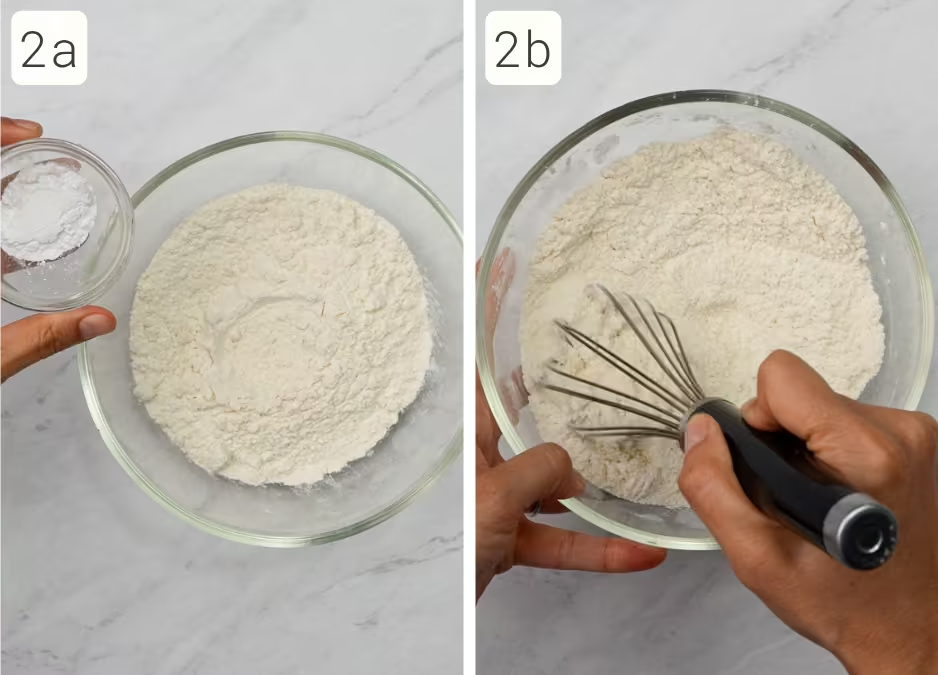
In a medium bowl, whisk the flour and baking powder together (2a, b). You can either sift now or add it to the wet batter in step 4, as I do.
STEP 3 | Cream and flavor the butter.
WHY:
Mixing the spices, vanilla, and salt directly into the butter helps distribute those flavors evenly through the batter. Many spice aroma compounds dissolve readily in fat, so mixing the spices directly into the butter helps extract and distribute those aromas throughout the batter.
I love brown sugar with pumpkin desserts because of its molasses, which pairs so well with it. Adding it to the butter aerates it just a bit, but there is far more sugar than butter, so the mixture will be quite thick and textured from the sugar until we add the eggs.
The eggs and yolk add moisture, fat, emulsifiers, and proteins that help give the cupcakes structure. At the end of this process, the mixture should look lighter and slightly more aerated as mixing incorporates tiny air bubbles and disperses the fat and water more evenly. This won’t last very long though, which you’ll see in the next step ;)
HOW:
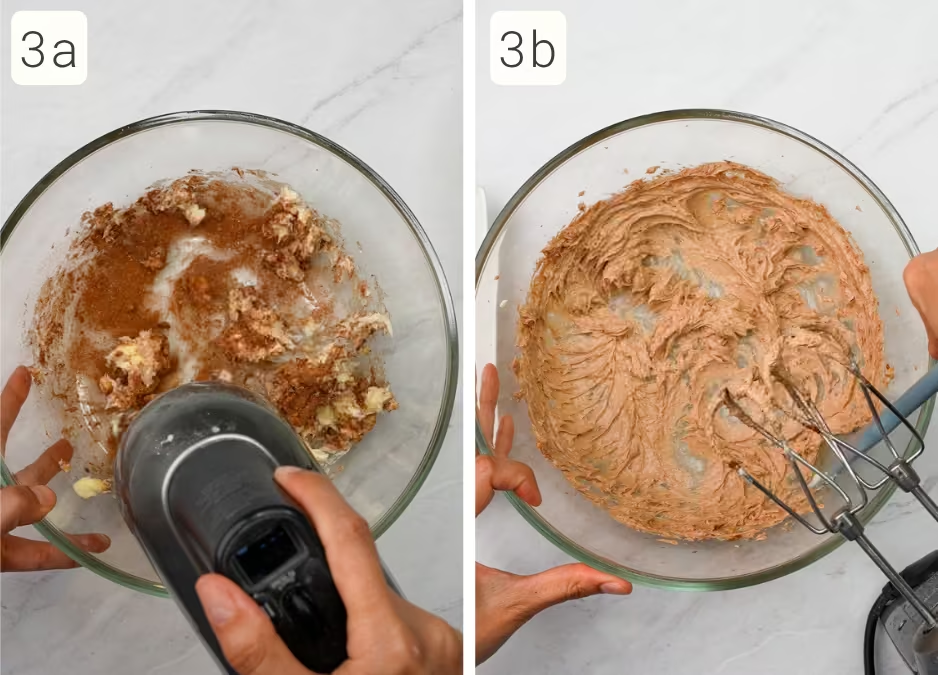
Add the butter to a large mixing bowl along with all the spices, vanilla, and salt (3a). Using the paddle attachment, mix on medium-high speed for at least 1 minute. The butter should be smooth, pale brown, and evenly speckled with spices (3b).
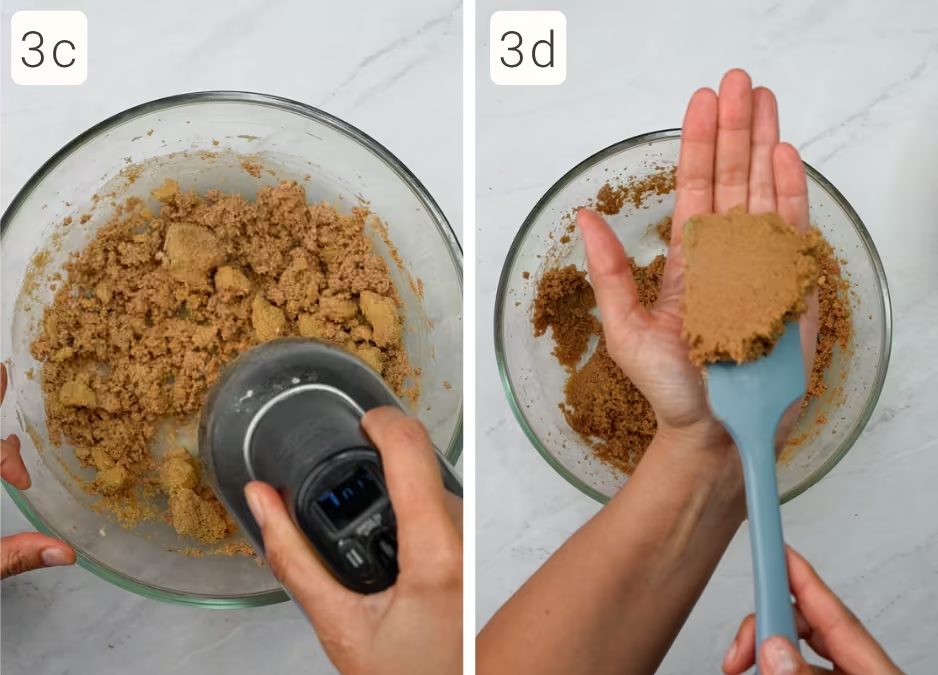
Add the brown sugar and mix on high speed for another 1 minute (3c), until the mixture forms a thick paste (3d).
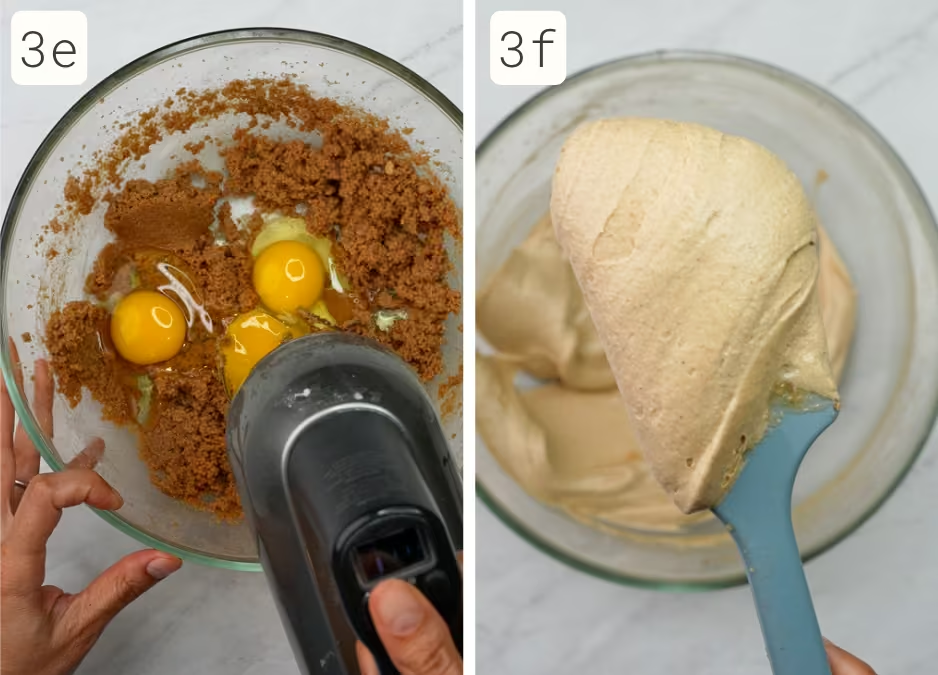
Add the eggs and yolk (3e). Mix on medium-high speed for 2 minutes, or until the batter is slightly paler and slightly aerated (3f). Scrape down the bowl once during this process.
STEP 4 | Alternate adding the dry ingredients and pumpkin puree.
WHY:
This step alternates the wet and dry ingredients, mixing between each addition. It may seem annoying, but there is a reason for it! This process helps the flour disperse evenly throughout the batter.
Some cakes can handle adding the wet and dry ingredients all at once (and they’re categorized as “single stage” cakes on my page), especially when they contain lots of liquid or use oil, which lets us mix the flour into the batter evenly.
However, in this recipe, we risk a batter that’s too dry at first and then really wet (or the other way around, depending on what you do first), and the flour can’t disperse as evenly. Alternating the wet/dry ingredients builds the batter more gradually and evenly.
When adding the pumpkin puree, the batter may look slightly broken or curdled. This is totally normal; pumpkin contains lots of water along with fibrous plant material, both of which disrupt the delicate butter-and-egg emulsion. It may look strange at certain points, but the batter will still work.
🤓 Fun Science Fact: Pumpkin simply isn’t an easy ingredient to incorporate into a delicate butter-based emulsion, so it is much more common to see pumpkin cakes that use oil as the primary fat, which is then used in a <span class="def-term" data-term="single-stage-mixing">Single Stage Mixing Method</span>. As a result, you can make a good guess about the texture of the cake, since the mixing method does play a role (although it is not the only factor) in the final texture. The single-stage mixing method often creates cakes with a thicker, more substantial crumb and a closely knit crumb framework. This actually is really nice for pumpkin cakes!
HOW:
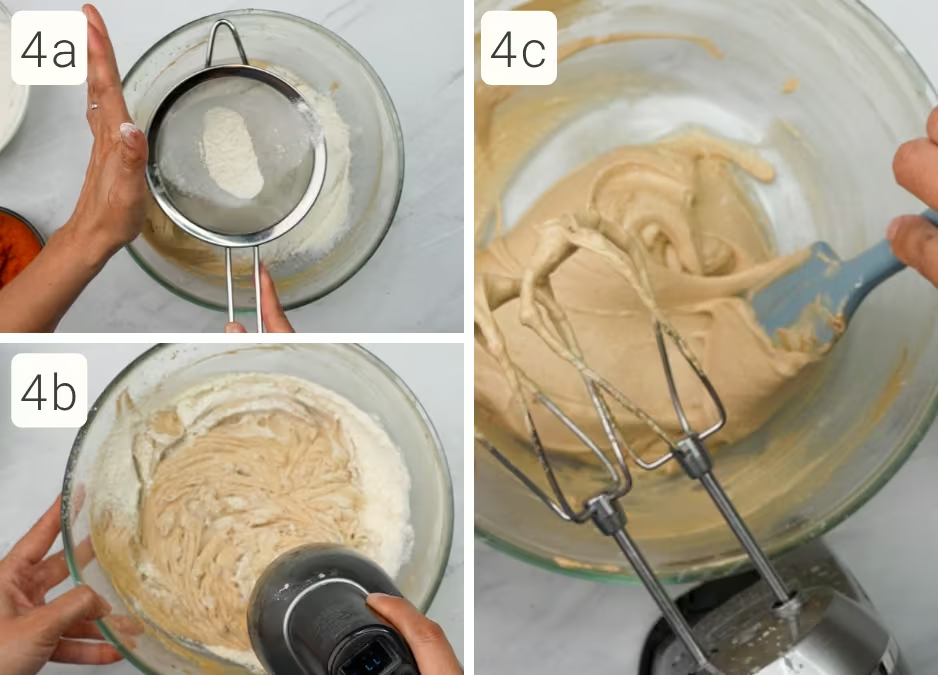
Add ⅓ of the flour mixture to the batter (4a) and mix on low speed until just incorporated (4b). Scrape down the bowl with a spatula (4c).
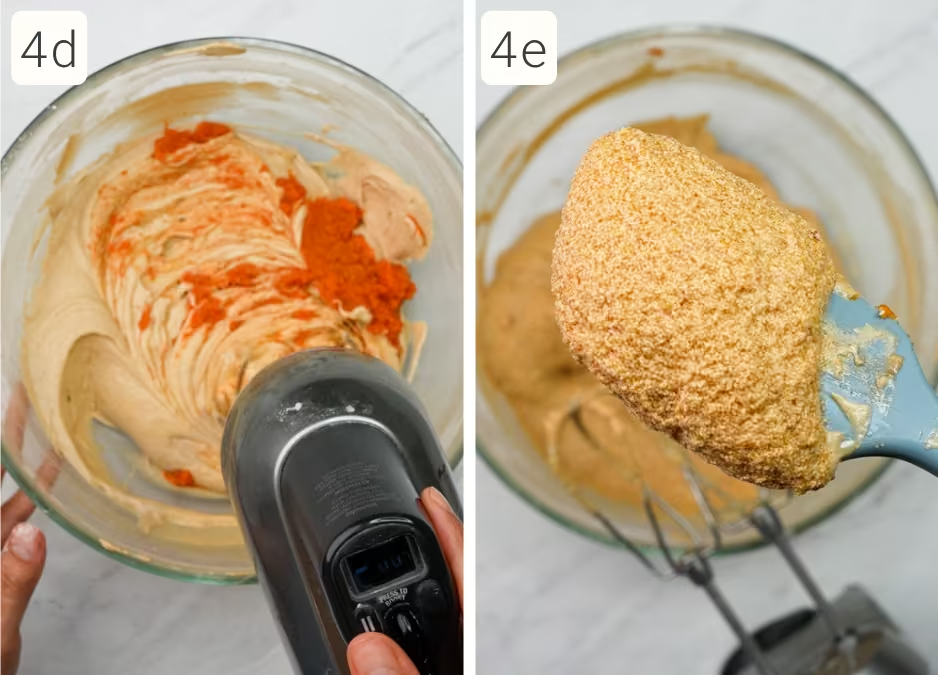
Add half of the pumpkin puree, mix on low, and scrape the bowl (4d). The batter may look slightly broken or curdled at this stage; this is normal (4e).
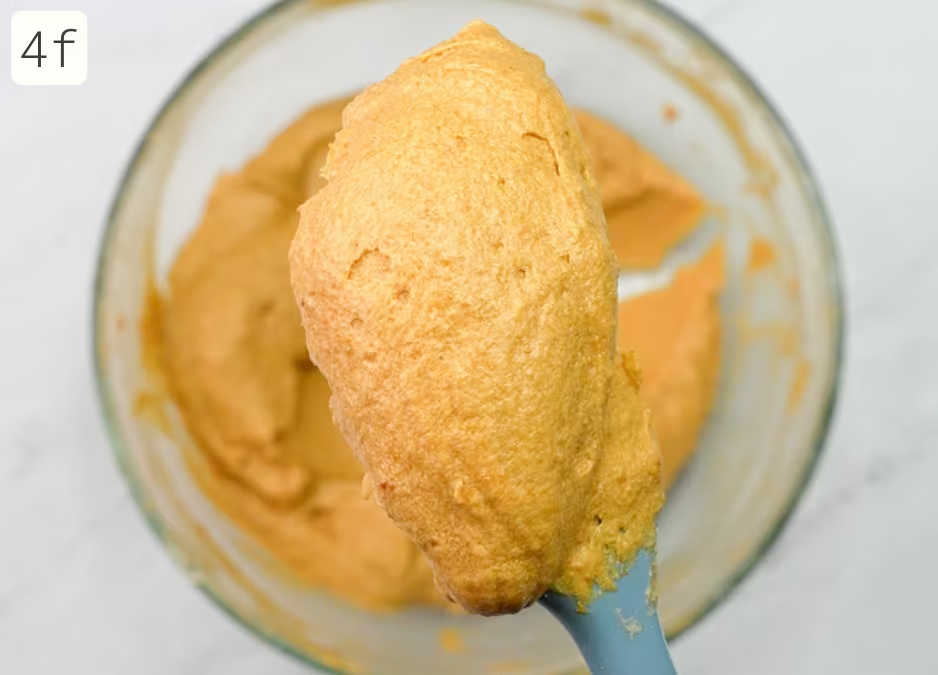
Repeat this process and then end with the last bit of flour. The batter may look partially broken but predominantly orange (4f).
STEP 5 | Fill the cupcake pan and bake.
WHY:
During baking, the baking powder produces gas, the eggs and flour set the cupcake’s structure, and moisture from the pumpkin turns to steam. Together, these changes help the cupcakes rise and hold their shape.
Learning how to tell when baked goods are done takes tons of practice. And to make it even more difficult, each recipe will be different. I always try to give you visual clues, but honestly, the best way to learn these cues is to use an instant-read thermometer. The internal temperature of cupcakes is an indication of doneness, the same way you’d check a steak.
HOW:
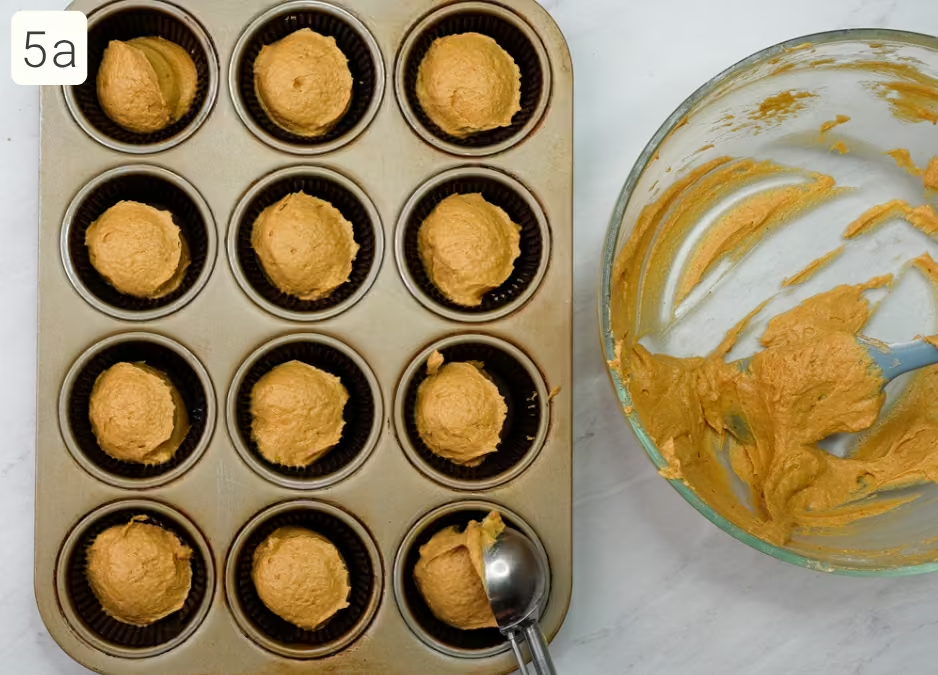
Divide the batter among the prepared cupcake liners, filling each about ⅔ full (5a). Bake for 20–25 minutes.
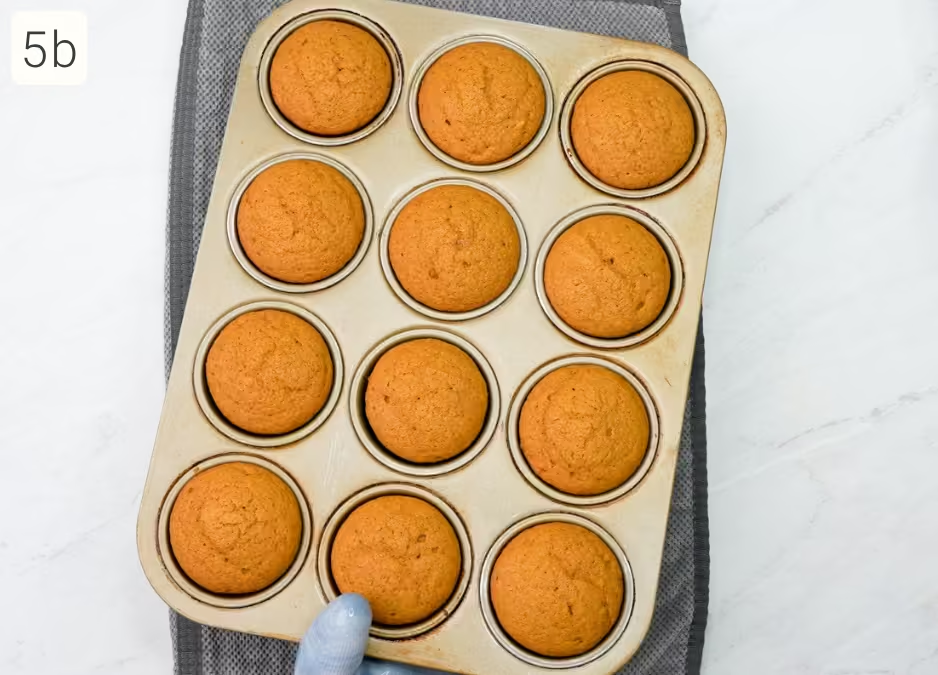
A skewer inserted into the center should come out with a few crumbs attached. If using a thermometer, the internal temperature should be 190–200°F (88–93°C) (5b).
STEP 6 | Cool the cupcakes completely.
WHY:
Transferring them to a cooling rack allows air to circulate around the cupcakes so excess heat and steam can escape. They should be completely cool before frosting because even a slightly warm cupcake can soften or melt a butter-based frosting.
HOW:
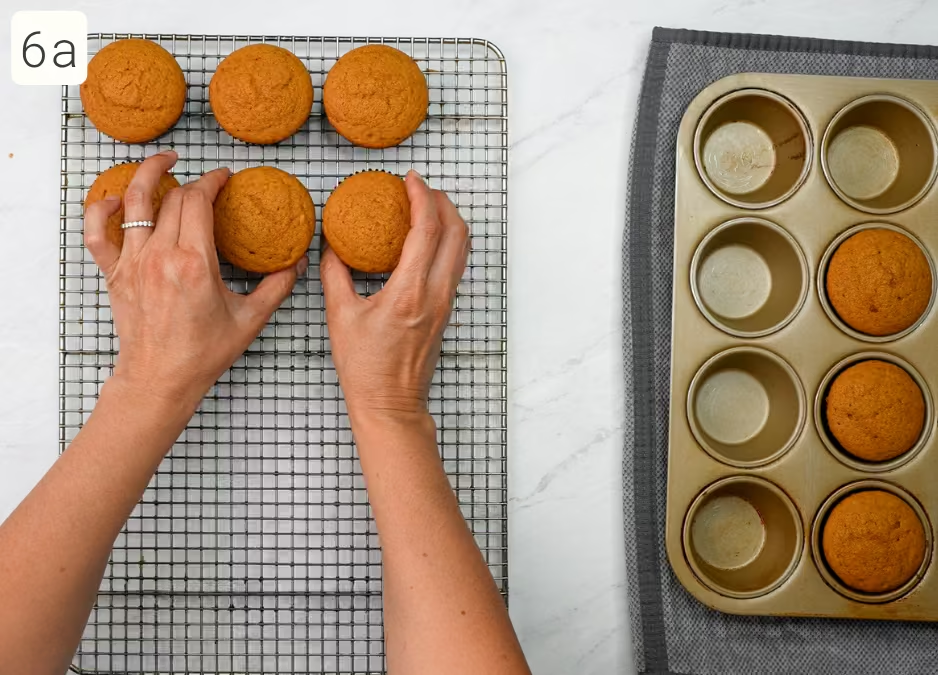
Once the cupcakes are cool enough to handle, remove them from the tray and place them directly on the cooling rack (6a).
While they cool, I like to make my Brown Butter Cream Cheese Frosting.
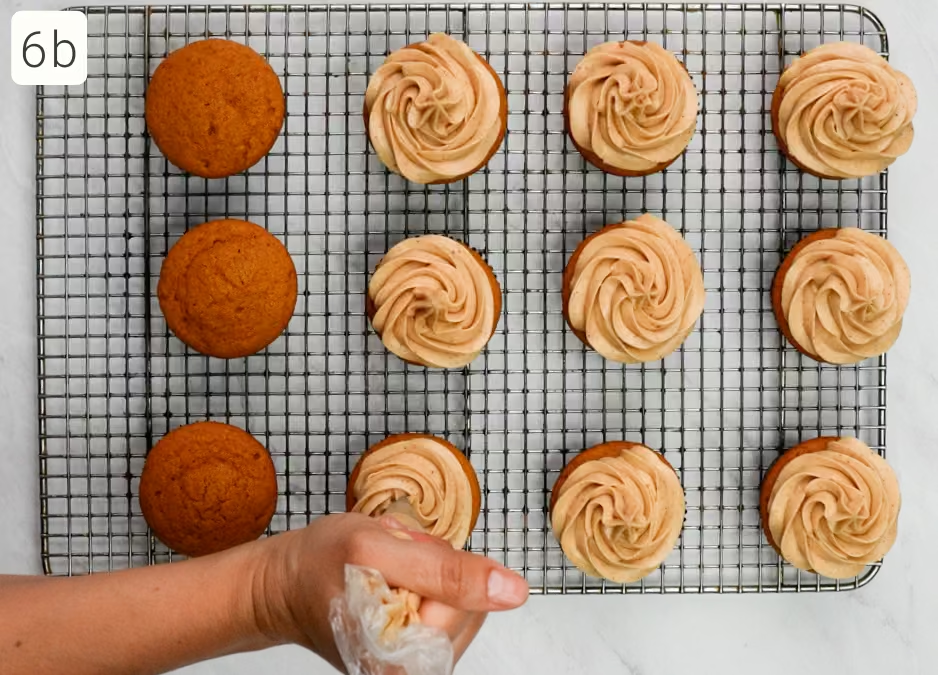
Allow the cupcakes to cool completely before frosting (6b).
Video
Honors Members Section
This extra material is accessible to Sugarologie Honors members.
Become a member to view extended research notes, technique analysis, and supplemental materials! Learn more about Sugarologie Honors here.
Already a member?
Before starting the recipe, please read this!
Measure by weight, if possible.
Measuring by weight is the best way for you to replicate my recipes. I develop recipes using ingredients (even liquids) measured in grams, which is why you see them listed first in the recipe cards. For measurements under 5 grams, I will typically only list the volumetric measurements (teaspoons, etc.), as most home scales are not precise for such small weights.
In most cases, I have converted grams to volumetric measurements (aka US customary units) for bakers who prefer this method. However, the measurements are not as precise and may have awkward proportions. The recipes should still work, but for the ultimate precision, try to use weight.
This is the OXO scale I use daily. I also purchased this budget version of a good scale, which I keep at my Mom’s house for baking. If you’re interested in other tools I use for my baking, I’ve compiled a list here.
Use room temperature ingredients.
All my ingredients should be used at room temperature, or 65-75 °F/18-24 °C. I will always indicate if you need something outside this range. If no details are given, room temperature is the default.
Pay attention to the ingredient descriptions.
I try not to be brand-specific, but I will always note an interesting result from a type of ingredient, be it negative or positive.
A specific note regarding salt: I use Diamond Crystal Kosher salt for everything on this site except for frostings. In frostings, you want the salt to dissolve more easily, and kosher salt tends to leave granules behind. If you substitute table salt (more finely granulated) for recipes that list kosher salt, you must use half the volume indicated in my recipes.
Substitutions are hard.
That said, substitutions aren’t impossible but can be the toughest part of recipe development. Small swaps, like reduced-fat milk (2% fat) for whole milk (3.5% fat), usually work fine. However, bigger changes—such as replacing oil with applesauce or sour cream with Greek yogurt—can significantly impact texture and density.
Be wary of general, all-purpose substitutions in baking; I find that usually there is never a one size-fits-all solution. I carefully select ingredients for my recipes, so for the best results, start with the original recipe and modify with caution.
Read all the recipe instructions before beginning.
I’m in the “Pre-read the Chapter before Class Lecture” club... and I invite you to join! Baking new recipes can be intimidating, so let’s set you up for success. I want you to think about timeframes. Most fillings and frostings can be made ahead of time, and give you an extra day for mental space. Also, as you become a more proficient baker, you can anticipate and recognize steps. (“Oh, this has a meringue step, so I’ll need an extra clean bowl…” etc.) Ensure you go down the ingredient list and have everything at the right temperature.
.avif)
.avif)
.png)

Pumpkin Spice Cupcakes with Brown Butter Cream Cheese American Buttercream
Pumpkin Spice Cupcakes:
- 150 g (1 ¼ cups) all-purpose flour, unbleached
- 1 ¼ teaspoons baking powder
- 84 g (6 tablespoons) unsalted butter
- 1 teaspoon ground cinnamon
- ½ teaspoon ground ginger
- ⅛ teaspoon ground nutmeg
- 1 teaspoon kosher salt (I use Diamond Crystal)
- 5 g (1 teaspoon) vanilla extract
- 207 g (1 cup) brown sugar, light or dark*
- 100 g (2 large) eggs
- 20 g (1 large) egg yolk
- 184 g (¾ cup) pumpkin puree, canned**
Brown Butter Cream Cheese American Buttercream:
- 12 g (1 ½ tablespoons) non-fat dried milk powder***
- 70 g (5 tablespoons) unsalted butter (for Super Brown Butter 🧈)
- 113 g (½ cup) full-fat cream cheese, cold from the fridge
- 226 g (1 cup) unsalted butter, around 60°F/15°C (for Frosting Base 🧁)
- 150 g (1 ¼ cups) powdered (confectioner's) sugar****, sifted if clumpy
- ½ teaspoon vanilla extract
- ⅛ teaspoon fine sea salt
Want to make more cupcakes or switch out the frosting? Go to the Cakeculator and make your selections!
Pumpkin Spice Cupcakes:
- 150 g (1 ¼ cups) all-purpose flour, unbleached
- 1 ¼ teaspoons baking powder
- 84 g (6 tablespoons) unsalted butter
- 1 teaspoon ground cinnamon
- ½ teaspoon ground ginger
- ⅛ teaspoon ground nutmeg
- 1 teaspoon kosher salt (I use Diamond Crystal)
- 5 g (1 teaspoon) vanilla extract
- 207 g (1 cup) brown sugar, light or dark*
- 100 g (2 large) eggs
- 20 g (1 large) egg yolk
- 184 g (¾ cup) pumpkin puree, canned**
Brown Butter Cream Cheese American Buttercream:
- 12 g (1 ½ tablespoons) non-fat dried milk powder***
- 70 g (5 tablespoons) unsalted butter (for Super Brown Butter 🧈)
- 113 g (½ cup) full-fat cream cheese, cold from the fridge
- 226 g (1 cup) unsalted butter, around 60°F/15°C (for Frosting Base 🧁)
- 150 g (1 ¼ cups) powdered (confectioner's) sugar****, sifted if clumpy
- ½ teaspoon vanilla extract
- ⅛ teaspoon fine sea salt
Want to make more cupcakes or switch out the frosting? Go to the Cakeculator and make your selections!
Make the Pumpkin Cupcakes:
- Preheat the oven and prepare the pan.
Move your rack to the middle position. Preheat the oven to 350°F (180°C).
Add cupcake liners to a standard-sized cupcake tray. - Prepare the dry ingredients.
In a medium bowl, whisk together the flour and baking powder. You can sift the mixture now, or sift each portion directly into the batter as you add it in Step 4, as I do. - Cream and flavor the butter.
Add the butter to a large mixing bowl along with all the spices, vanilla, and salt. Mix on medium-high speed with the paddle attachment for at least one minute. The butter should be smooth and pale brown, and speckled with spices.
Add the brown sugar and mix for another minute on high speed until it forms a thick paste.
Add the eggs and the yolk to the batter and mix on medium-high speed for 2 minutes, or until the batter is slightly paler and slightly aerated. Scrape down once during this process. - Alternate adding the dry ingredients with the pumpkin puree.
a. Add ⅓ of the flour to the batter and mix on low speed until just incorporated. Scrape down the bowl with a spatula.
b. Add half of the pumpkin puree, mix on low, and scrape the bowl. You may notice the cake batter looks slightly broken/curdled at this step; this is normal. Mix until you see no streaks of pumpkin puree, then continue with the recipe.
c. Add another third of the flour mixture, mix on low, and scrape again.
d. Add the rest of the pumpkin puree, mix on low, and scrape.
e. Finally, add the remaining flour and mix until fully combined. - Fill the cupcake pan and bake.
Add enough batter to each liner until about two-thirds full.
Bake for about 20-25 minutes.
A skewer inserted in the center should come out with a few crumbs. Using a thermometer, the internal temperature should be between 190 and 200°F (88 and 93°C). - Cool cupcakes.
Place the hot cupcake tray on a cooling rack. Once the cupcakes are cool enough to handle, remove them from the tray and place them directly on the rack to cool completely before frosting.
Make the Brown Butter Cream Cheese Frosting:
- Prepare the Super Brown Butter.
a. Set up an ice bath (optional but recommended).
Fill a large bowl with ice water and place a smaller heatproof bowl inside for the hot browned butter. This speeds cooling so you can proceed with the recipe right away. If making it ahead of time and cooling for a longer period (up to a day in advance), set aside a heatproof bowl to collect the hot Super Brown Butter.
b. Sift the milk powder into a small bowl to remove any lumps.
c. Brown the butter.
Before you start, I like to set aside a little pot holder or something to put your hot pan onto. You’ll need immediate access to it, so place it somewhere convenient.
Add the unsalted butter (labeled: for Super Brown Butter 🧈) to a light-colored pan and melt over medium heat. The butter will foam as the water evaporates. If it sputters excessively, reduce the heat. Stir continuously with a silicone spatula, scraping the bottom and sides to prevent the milk solids from sticking. Continue until the milk solids are light brown.
d. Toast the milk powder in the hot butterfat.
Turn off the heat and remove the pan from your heat source. Continue stirring while sprinkling in the sifted milk powder. It may clump, but that’s ok; just use the spatula to smash the big clumps. Little clumps (smaller than a grain of rice) are ok as those will dissipate with heat. The mixture should be opaque with milk powder and look like coffee with lots of creamer in it (very light tan).
Once all the milk powder has been added and is as evenly distributed as possible, return your pan to medium heat. Stir and cook until the liquid is a deep amber color.
e. Cool the Super Brown Butter.
Immediately scrape the Super Brown Butter into the heatproof bowl. If using the ice bath, stir every 5–10 minutes with your spatula. Remove the bowl from the ice bath once you have a very thick, spreadable paste. The temperature of your Super Brown Butter should ideally be below 60°F/15°C before adding it to your frosting.
- Combine the brown butter and cream cheese.
Add the cooled Super Brown Butter to a large mixing bowl fitted with a paddle attachment and mix on low until creamy.
Add the cold cream cheese and mix on low until completely combined. Transfer the mixture to another bowl and refrigerate while preparing the frosting base. - Make the frosting base.
Cut the butter labeled for Frosting Base 🧁 into chunks. Beat on medium speed until smooth. Add the powdered sugar in approximately three additions, mixing on low after each.
With the final addition, mix in the vanilla and a pinch of salt. - Finish the frosting.
Add the chilled Super Brown Butter–cream cheese mixture to the butter-powdered sugar base. Mix on low just until nearly combined, then finish blending with a spatula. A slight thinning is normal. Taste and adjust the salt as needed. Use immediately.
Frost the Cupcakes
- Once the cupcakes are completely cool and the frosting is smooth and creamy, fill a large piping bag fitted with your preferred piping tip. Pipe frosting onto each cupcake and serve.

Recipe Card - Adriana's Notes
*Light brown sugar will produce an oranger-hued cake with a slightly fluffier crumb texture. In contrast, dark brown sugar produces a darker orange (pictured above in my intro cake information card) with a slightly denser crumb.
**It may be tempting to use your own pumpkin puree (I know, I make some every Fall too), but I calibrate everything to the water level of the ingredients in this recipe. Your homemade version, as delicious as it may be, might have a different moisture content depending on how long you roasted your pumpkins, etc., so for the best results, stick to the canned version for this recipe.
***There are a few types of milk powder available (nonfat, whole, sweet cream buttermilk, malted, etc.), but the best one for this recipe is the nonfat variation. It is more concentrated in milk proteins, which are the primary source of brown butter's flavor.
****Try to use the highest-quality powdered sugar you can find; these are typically labeled “10X” or higher. Generic brands tend to cut their powdered sugar with a higher ratio or coarser types of starch, which, when uncooked, can feel grainy or sandy in the final frosting. One American brand that works well for me is C&H.
Recommended Sugar Lab Recipes + Experiments
.avif)
.avif)

Got room for more dessert?
Subscribe to my Crumby Data newsletter! I share behind-the-scenes looks at recipe development, flavor testing for the Cakeculator, and life as a content creator. It’s free, lands in your inbox every few weeks, and you can unsubscribe anytime...no strings attached :)
Feel free to take a look at previous newsletters here!

.ico)