
.avif)
Types of Vanilla Cake: How to Choose the Best One


With a subtle, floral aromatic flavor, vanilla cake is truly the queen of versatility. She’s recognizable and flavorful enough to stand on her own while at the same time, providing you with a blank slate by having the ability to pair with almost any other flavor. However, vanilla cakes come in so many different styles and textures. How do you pick the right one for your dessert?
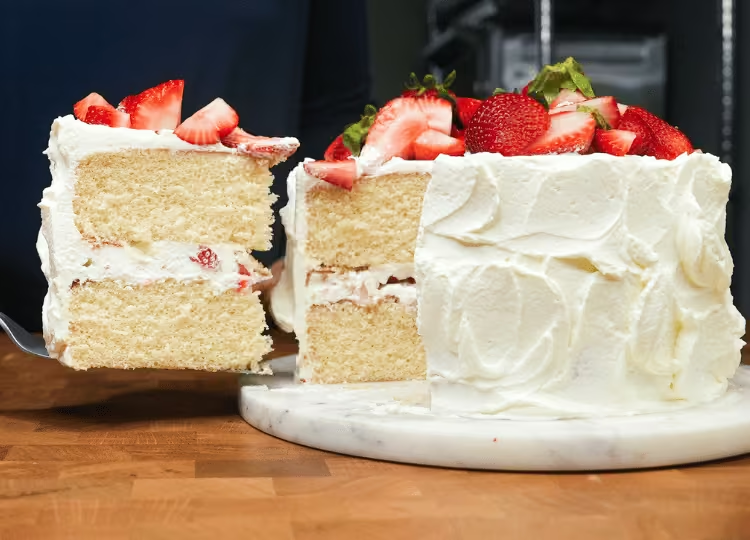
Generally, I think that vanilla cakes live in this huge gray area. It’s so hard to figure out what you’re actually getting when you pick a recipe to bake. My goal for this guide is to share all the data I’ve gathered so you can navigate not only my recipes, but also cake recipes everywhere.
In this guide, I will explain the main types of vanilla cakes I have on my site and in the Cakeculator. Each vanilla cake is uniquely designed with a different texture, moisture level, crumb network, and sweetness/fat percentages. You can then read the deep-dive guides I’ve written on that particular cake style or move on to the Cakeculator to design your own cake from scratch.
Ready to learn about cake? Let’s get started!
How do you choose the right vanilla cake?
Usually, when we pick a cake, we typically think about the flavor first.
Now you’re on the Vanilla Cake page, so I’m going to assume that’s where we’re headed in terms of flavor. And there is a bit of nuance among flavors within the Vanilla Cake category.
Vanilla, as an ingredient (whether in liquid, paste, or solid form), acts more as an enhancer rather than a dominant flavor. In the case of a vanilla cake, what you’re really tasting is the symphony of ingredients (eggs, flour, sugar, water, dairy, etc.) enhanced by vanilla. Specific ingredient ratios and formulations (e.g., high-butter ratios or sour cream vs. buttermilk) will have distinct effects on flavor, and I will cover them in the cake recipes I’ve developed.
Another way to categorize vanilla cakes, which I use during development because it often defines other characteristics, is by whether the cake is yellow or white.
The main difference between yellow and white cakes is that yellow cakes typically contain egg yolks, whereas white cakes do not. (By the way, this is not a hard-and-fast rule, because, for instance, my vegan vanilla cake is a “yellow” cake that contains no eggs at all. But I do use this delineation nonetheless because yellow cakes and white cakes often have a few differences.)
Most obviously, the presence of yolks will affect the color of the vanilla cake, with the yolk-containing cakes being more cream/tan/yellow. But in terms of flavor, yolks contain umami-rich flavor compounds and add a wonderful depth of flavor to a cake. The yellow baseline flavor is often vanilla-eggy-flour, whereas white cakes often offer a sweeter, cleaner vanilla-flour flavor.
After we decide on the cake's flavor, the texture is usually next.
This is actually the opposite of how I design recipes because I often try to address the texture first. For my cakes, you can look at the mixing method, which should give you a strong indication of the texture.
For all the Sugarologie cakes, I typically use one of four mixing methods:
- Single-Stage Mixing
- Fat Creaming
- Dual Aeration
- Egg Foaming
As you move from method 1 (Single-Stage) to method 4 (Egg Foaming), more time-intensive methods and techniques are required. The payoff is that you usually get a more finely textured and aerated cake.
.avif)
You can, of course, also alter texture by using ingredient types and ratios (more vs. less fat; butter vs. oil), but I find those to be secondary, at least in my research. So you’ll sometimes see things like “sour cream makes a denser and moister cake,” and while that may be true most of the time, I can probably create a sour cream-based chiffon that is as light and airy as the next chiffon. I feel as if mixing methods is more definitive for my cakes, which is why I always address the texture first.
Other general FAQs that will help you choose a vanilla cake:
What vanilla cake is best for cupcakes (or your particular size of cake needed)?
You may initially be wondering what vanilla cupcakes or a 3-layer cake made with 8-inch round cake pans are. The answer is: any of mine!
The size of the cake you’re baking (commonly used in home-baking kitchens) will not matter, because each one of my vanilla cake recipes is calibrated to scale up or down. You should get similar results whether you are baking a dozen cupcakes or stacking a behemoth 8-inch layer cake. Of course, there will be best practices for each size you choose, and I always try to annotate all those variables.
Can I use a hand mixer to make this cake?
Even if you see me use a stand mixer in my videos/photos, feel free to use a hand mixer in any of the cakes listed below. The only caveat is that hand mixers are generally less efficient because you can only move your arm so fast. Properly mixing ingredients is essential for forming the right batter and, therefore, the cake's final texture. When using a hand mixer, mixing will not be a function of time but rather of effort. Just follow the pictures to check the batter's consistency so you’re on the right track.
What vanilla cake is best for making ahead of time?
I almost always bake my cakes one day and frost the next. I bake my cakes, and once they’re cool enough to handle and still a bit warm, I wrap them in plastic and store the layers on my countertop. You can also freeze cake layers for a couple of weeks (wrapped in plastic wrap) before decorating. Some cake decorators actually prefer frozen cakes for their ease of use.
7 Vanilla Cakes categorized from easiest to challenging
Here are the seven main types of vanilla cake I have on my site. We’re going to move from the easiest to the most challenging.
Click on each vanilla cake to jump to your preferred type, or start reading below to learn the pros and cons of each one:
Beginner-Level Cakes
As the easiest cakes on my site, these beginner-level cakes are simple to mix and require no special technique.
Typically, these cakes rely on adding ingredients sequentially and thoroughly mixing. This mixing does add a tiny bit of aeration (small air pockets), and the cake's rise relies exclusively on chemical leaveners. Because the aeration of this mixing method is relatively minimal, the cakes in this category have a closer, more tightly knit crumb structure.
Bakers who love moist cakes with a creamy or super-plush texture typically enjoy cakes from this category.
The techniques often required to make beginner-level cakes may include:
- learning how to weigh ingredients instead of using volumetric (cups, tablespoons, teaspoons, etc). Volumetric measurements will still be provided for my recipes to give you some familiarity.
- mixing butter (and sometimes oil) with sugar sufficiently to aerate the batter.
- sifting dry ingredients to mix leavening agents.
- alternating adding dry and wet ingredients to the batter to create an evenly distributed batter.
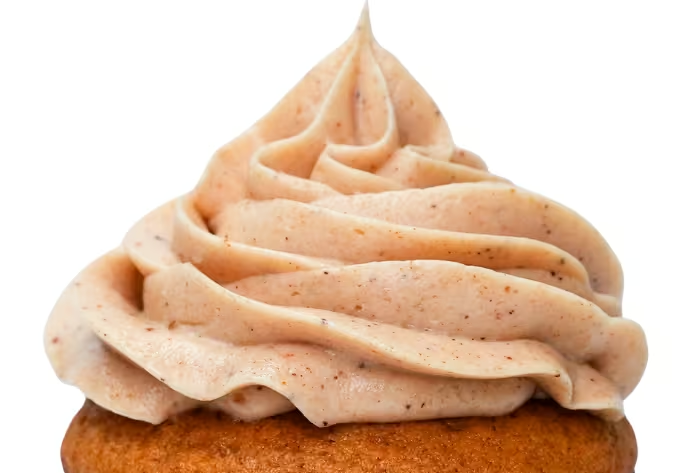
This Vanilla Sour Cream Cake recipe makes a super-moist, amazingly flavorful cake made from white box cake mix. Don’t be deterred by this; when paired with a good Vanilla Buttercream (such as my American Dreamy Buttercream, as pictured below), it tastes like a homemade frosted sugar cookie. It’s a great back-pocket recipe to have, and I use it whenever I need a large quantity of cake quickly (e.g., for parties or school events). Additionally, this is the best beginner-friendly recipe because it will get you acquainted with measuring ingredients, getting a feel for mixing ingredients until combined, and knowing when a cake is done baking.
.avif)
My Vanilla Sour Cream Cake is a form of “cake mix doctoring,” whereby extra ingredients not normally included in the box directions are added. Maybe you’ve heard of a few variations of modifying box mix cake, such as to “add an extra egg,” or “use milk instead of water.” Generally, the goal is to make the cake taste a little more homemade and improve upon flavor and texture. My method is a tiny bit more involved than other doctored cake mix recipes, but relatively simple compared to the cakes that follow in this list. Simply dump all the ingredients in a bowl, mix, and bake.
Do choose Vanilla Sour Cream (enhanced box mix) Cake if:
- you love the nostalgic texture and flavor of box-mix cakes or grocery-store bakery cakes (Costco, Nothing Bundt Cakes, etc.) They almost always use a mix.
- you need a massive quantity of cake for an event; this recipe is very cost- and time-efficient compared to a 100% scratch cake.
- you enjoy cakes that are plush and substantial; the crumb is very creamy and moist.
Don’t choose Vanilla Sour Cream (enhanced box mix) Cake if:
- you want an airier, more open crumb structure.
- you don’t enjoy box cake in any way; although extra ingredients are added, the box mix flavors (artificial vanilla, bleached flour) are still apparent.
- you want to learn or improve upon cake mixing techniques - this is really just a dump-in-one-bowl recipe.
How to use Vanilla Sour Cream (enhanced box mix) Cake in the Cakeculator:
My Cakeculator is a custom cake recipe tool. Under “Cake Flavor,” you’ll want to locate the “⚡️ Enhanced Cake Mixes” category and pick “Vanilla Sour Cream (Enhanced Box Mix).” From there, you can customize your cake as needed regarding the size and frosting.
If you need some ideas, here are some great recipes to get you started:
Two layers of Vanilla Sour Cream (Enhanced Box Mix) Cake (8-inch rounds)
Two Dozen Vanilla Sour Cream Cupcakes with Vanilla American Dreamy Buttercream
Vanilla Sour Cream (Enhanced Box Mix) Cake with Vanilla Classic American Buttercream (Two 8-inch layers)
I also have a very similar buttermilk version of the Enhanced Box Mix Cake.
Instead of sour cream, you’ll use buttermilk, which creates a cake that’s slightly more aerated and tangier, since it has a higher water content and tastes more acidic. Under “Cake Flavor,” you’ll want to locate the “⚡️ Enhanced Cake Mixes” category and pick “Vanilla Buttermilk (Enhanced Box Mix).” From there, you can customize your cake as needed regarding the size and frosting.
Vanilla Almond White Cake is a classic white cake with a super-moist, plush texture. Without any yolks in the batter, the cake crumb remains creamy to pure white, with a buttery, baked-flour flavor. Go all in with flavor and use both almond and vanilla extracts, or use just vanilla to boost the buttery-sweet-flour aroma.
.avif)
This cake is perfect for beginners. It uses a mixing method I’ve developed that prioritizes simplicity with consistently excellent results. The secret is to use cold sour cream, which acts as a foundation for the cake batter. The sour cream is a stable emulsion into which all the other ingredients will be sequentially added. A bit of aeration is introduced during these mixing steps, and, as with the other cakes in the beginner category, the crumb network is more tightly packed. And because of this, the final baked cake texture is incredibly plush and velvety.
Do choose Vanilla Almond White Cake if:
- you want a cake with a pure white crumb. As this recipe does not contain any yolks (the primary determinant for the natural yellow color in cakes), the crumb will be light cream to pure white, depending on the flour type/extracts used.
- you love a nostalgic white cake flavor that leans slightly buttery-sweet.
- you enjoy cakes that are plush and substantial; the single-bowl mixing technique creates a closely textured crumb.
Don’t choose Vanilla Almond White Cake if:
- you want an airier, more open crumb structure. (I suggest the Sprinkle 2.0 Cake, which is my more aerated white cake, listed in the Intermediate-Level Cake section.)
- you like a less-sweet cake; this one leans slightly on the sweeter side.
- you need a more complex flavor; as this cake doesn’t use egg yolks, it can read one-note. However, this is ideal for pairing with complex or strongly flavored fillings and frostings as it will not compete with those flavors.
How to use Vanilla Almond Cake in the Cakeculator:
My Cakeculator is a custom cake recipe tool. Under “Cake Flavor,” you’ll want to locate the “🍨 Vanilla” category and pick “Vanilla Almond White.” From there, you can customize your cake as needed regarding the size and frosting. If you need some ideas, here are some great recipes to get you started:
Two layers of Vanilla Almond White Cake (8-inch rounds)
Vanilla Almond Sheet Cake with Vanilla Classic American Buttercream (9x13 cake pan)
Vanilla Almond White Layer Cake with Whipped Cream Cheese Frosting (Two 8-inch layers)
My Classic Vanilla Yellow Cake has a wonderful, sweet, buttery flavor with a mild acidity from the sour cream. This is Vanilla Almond White Cake’s slightly more buttery cousin, as the addition of egg yolks enhance the flavor and yields a slightly more golden cake. The overall texture of this yellow cake is super-moist and creamy, with a soft and tender crumb.

If you’re looking for an entry-level scratch yellow cake, this Classic Vanilla Yellow Cake is great to start with. It uses a single-stage mixing method, meaning ingredients are added sequentially to a single bowl, except for one smaller bowl that holds the flour-and-baking powder mixture. It also gives you great practice separating eggs and alternating adding dry/wet ingredients. Additionally, this cake is much quite forgiving (even if you don’t separate those eggs perfectly) because it doesn’t require a meringue, which is a little more finicky.
Do choose Classic Vanilla Yellow Cake if:
- you love a classic buttery pound cake flavor; this is very similar, but in a lighter, more aerated cake.
- you have some yolks to use up; this yellow cake uses one whole egg plus one yolk for every 8-inch round.
- you enjoy cakes that are plush and substantial; the single-stage mixing method tends to produce relatively denser cakes. (Don’t worry, still light and cake-like; but compared to say my chiffons, these are more closely textured.)
Don’t choose Classic Vanilla Yellow Cake if:
- you want an airier, more open crumb structure. (I suggest the Buttermilk Yellow Cake, which is my more aerated yellow cake, listed in the Intermediate-Level Cake section.)
- you like a less-sweet cake; this one leans slightly on the sweeter side.
- you want a cake with a pure white crumb. As this recipe contains yolks (the primary determinant for the natural yellow color in cakes), the cake’s crumb will be light to medium yellow.
How to use Classic Vanilla Yellow Cake in the Cakeculator:
My Cakeculator is a custom cake recipe tool. Under “Cake Flavor,” you’ll want to locate the “🍨 Vanilla” category and pick “Classic Vanilla Yellow.” From there, you can customize your cake as needed regarding the size and frosting. If you need some ideas, here are some great recipes to get you started:
Two layers of Classic Vanilla Yellow Cake (8-inch rounds)
Classic Vanilla Yellow Cake with Vanilla Classic American Buttercream (9x13 cake pan)
Classic Vanilla Yellow Cake with Chocolate Cream Cheese American Buttercream (Two 8-inch layers)
Intermediate-Level Cakes
Intermediate-level cakes require more detailed or time-consuming techniques to aerate the batter properly for baking.
In these cakes, the aeration, or lifting of the cake batter while it bakes, relies on two things: building structure in the batter before baking and using chemical leaveners. The structure-building is achieved either by whipping egg whites to create a foam or by building a gluten network (only in the vegan cake). This gives the batter a running start in terms of stable aeration before it hits the heat of the oven, where the chemical leaveners can expand the air bubbles.
Bakers who want a more aerated crumb structure with a lighter texture enjoy cakes from this category.
The techniques often required to make intermediate-level cakes include all the beginner-level tasks, plus:
- carefully separating egg yolks from whites;
- whipping egg whites to various stages (soft, medium, or stiff) to ensure proper air bubble size in the batter;
- folding whipped egg whites into thick batter for even air bubble distribution;
- understanding what an emulsified batter should look like; and
- creating a gluten network for high development to ensure proper cake crumb formation (for the vegan cake only).
If you’re looking for a vegan cake with a super-moist yet bouncy crumb that holds up for even the largest layer cakes, I have a cake for you. My Vegan Vanilla Cake has a wonderful, sweet, buttery, vanilla flavor. To aid in the structure of the cake crumb, you’ll need some chickpea powder, which also adds a wonderful and subtle nuttiness.
.avif)
As an intermediate-level cake, my Vegan Vanilla requires you to first build gluten in the batter before adding the remaining ingredients. This ensures that the batter has proper structure, which is often lacking in vegan cake formulations. Additionally, chickpea powder is added to solidify the cake’s crumb during baking, ensuring the final cake has a lovely, creamy texture with a bouncy resilience that yields a very pleasant eating experience.
Do choose Vegan Vanilla Cake if:
- you need a vegan vanilla cake for stacking. I designed this cake with the same stability requirements I apply to non-vegan cakes.
- you have yet to find your vanilla vegan cake. Vanilla is by far the most difficult flavor of cake to make, and this vegan one is no different. Add some miso paste for extra umami!
- you enjoy cakes that are plush and substantial.
Don’t choose Vegan Vanilla Cake if:
- you want an airier, more open crumb structure. (I have yet to build a vegan chiffon… maybe someday…)
- you need a drier cake; if you plan to soak this cake, know that it is already quite moist and has a harder time absorbing moisture.
I’ve written a master guide on the Vegan Vanilla Cake, which includes a recipe for a layer cake:
Vegan Vanilla Cake with Plant-based Vanilla Buttercream
How to use Vegan Vanilla Cake in the Cakeculator:
My Cakeculator is a custom cake recipe tool. Under “Cake Flavor,” you’ll want to locate the “🍨 Vanilla” category and pick “Vegan Vanilla.” From there, you can customize your cake as needed regarding the size and frosting. If you need some ideas, here are some great recipes to get you started:
Vegan Vanilla Cake Layers (Two 8-inch Round layers of cake)
Vegan Vanilla Cupcakes with Vegan Vanilla American Dreamy Buttercream (one dozen)
Vegan Vanilla Sheet Cake with Vegan Chocolate American Dreamy Buttercream
If you’re ready for a white cake with the fluffiest and moist crumbs, Sprinkle 2.0 is the one for you. As the more sophisticated sister cake to Vanilla Almond White, Sprinkle 2.0 uses whipped egg whites to trap air pockets in the batter before baking. And as a white cake, this one doesn’t use any yolks, yielding a pure white crumb with a sweet vanilla-flour aroma. Sprinkles are optional if you want a pure white cake, as this cake is formulated to bake with or without them.
.avif)
As an intermediate-level cake, the rise and texture will be largely dependent on the fluffiness of the egg white meringue you’ll need to whip up. To do this, the egg yolks need to be cleanly separated from the egg whites, as traces of yolk can limit the egg protein network from forming the meringue. This meringue needs to be folded into the batter, which then expands upon heating due to the baking powder. This creates a light and fluffy cake with a delicious, buttery, moist crumb.
And if you’re wondering why it’s called Sprinkle 2.0 - I continuously update my cake recipes. When I make a substantial change to a recipe, I’ll often indicate it with a numerical suffix, e.g., “Chiffon 2.0.”
Do choose Sprinkle 2.0 Cake if:
- you want a cake with a pure white crumb. As this recipe does not contain any yolks (the primary determinant of the natural yellow color in cakes), the cake’s crumb will be light cream to pure white (depending on the flour type/extracts used).
- you love a nostalgic white-cake flavor that’s not too sweet.
- you enjoy cakes that are fluffy yet moist.
Don’t choose Sprinkle 2.0 Cake if:
- you need a drier cake; if you plan to soak this cake (either with just flavoring syrups or in tres leches-type cakes), know that it is already quite moist and has a harder time absorbing moisture.
- you need a more complex cake flavor; white cakes tend to be more “plain” tasting than their yellow counterparts. However, this may be ideal if you have other flavorful components (such as frosting, fillings, or toppings).
How to use Sprinkle 2.0 Cake in the Cakeculator:
My Cakeculator is a custom cake recipe tool. Under “Cake Flavor,” you’ll want to locate the “🍨 Vanilla” category and pick “Sprinkle 2.0.” From there, you can customize your cake as needed regarding the size and frosting. If you need some ideas, here are some great recipes to get you started:
Sprinkle 2.0 Cake Layers (Two 8-inch Round layers of cake)
Sprinkle 2.0 Cupcakes with Vanilla American Dreamy Buttercream (2 dozen)
Sprinkle 2.0 Sheet Cake with Vanilla Cream Cheese American Buttercream (9x13 pan)
The Buttermilk Vanilla Yellow Cake is an upgraded version of the Classic Yellow Cake in terms of texture. With extra egg yolks in the batter, this cake bakes up with a beautifully buttery yellow crumb with a vanilla-buttermilk flavor. There is also a more aerated crumb structure due to the addition of whipped egg whites. This creates a cake with a lighter texture and feathery crumb that melts in your mouth with buttery goodness.
.avif)
As an intermediate-level cake, the Buttermilk Vanilla Yellow Cake uses a mixing method that combines both creaming and whipped egg whites. Creaming uses sugar to incorporate air pockets into the soft butter, which expand when the mixture is heated in the oven. The whipped egg whites add a bit more aeration to the batter, which also expand. Together, this creates a moist crumb that sits in a open crumb framework.
Do choose Buttermilk Vanilla Yellow Cake if:
- you want a buttery, vanilla, not-too-sweet cake.
- you have some extra egg yolks to use up! This cake wins for using the most eggs per cake of all the cakes on my site, coming in at 1 whole egg and 2 extra yolks per 8-inch round :)
- you are looking for a cake that is moist and fluffy; the hybrid mixing method (creaming + whipping egg whites) yields moist crumbs with lots of air pockets.
Don’t choose Buttermilk Vanilla Yellow Cake if:
- You want a super-moist, plush cake. The egg whites and flour needed to hold this cake do make it slightly on the drier side.
- You are not familiar with creaming and whipping egg whites. These dual mixing methods make the cake recipe a bit more involved - but the payoff is a nice light texture if you want to try!
How to use Buttermilk Vanilla Yellow Cake in the Cakeculator:
My Cakeculator is a custom cake recipe tool. Under “Cake Flavor,” you’ll want to locate the “🍨 Vanilla” category and pick “Buttermilk Vanilla Yellow.” From there, you can customize your cake as needed regarding the size and frosting. If you need some ideas, here are some great recipes to get you started:
Buttermilk Vanilla Yellow Layers (Two 8-inch Round layers of cake)
Buttermilk Vanilla Yellow Cupcakes with Chocolate Swiss Meringue Buttercream
Buttermilk Vanilla Yellow Sheet Cake with Chocolate American Dreamy Buttercream
The Vanilla Chiffon cake is my signature cake. Built on years of thinking and experimenting, it combines the two types of cakes from my childhood - a lighter Asian-style cake and an American birthday cake. I’ve formulated the recipe so it’s the lightest-textured cake on my site, with an open crumb structure and delicate, feathery crumbs. At the same time, it's stable enough to stack into the tallest cakes. The flavor is a classic - sweet, slightly eggy, and aromatic vanilla.
.avif)
Sometimes, you’ll see chiffon cakes baked in “tube pans,” which look like big metal donuts with a hole in the middle. Generally, those cakes are a little fragile to work with (sometimes requiring you to cool them upside down in their pans). My cake is a little different than those more fragile conventional chiffon cakes. I call these “hybrid” chiffon because I paired the light, airy texture with a reliable stability commonly seen in classic creamed-butter cakes. This means that although it is a lightly textured cake, it is structurally sound for stacking into large layer cakes if needed. And as a intermediate-level cake, to achieve this texture, we'll need to whip up a meringue, which then gets folded into a liquid batter.
Do choose Vanilla Chiffon if:
- you want an airy + light cake. The East Asian bakery cakes my family buys are the direct inspiration for this cake and have a similar texture.
- you are pairing with sweet frostings and fillings. As this cake base is not-too-sweet, it won’t overpower other sweeter cake elements.
- you have a bit of experience baking cakes; at an intermediate level, you’ll need to make a meringue for this cake and fold it in gently to get the best texture.
Don’t choose Vanilla Chiffon if:
- you prefer a creamier, moister crumb. This cake isn’t dry, but the tradeoff is that it's less moist than other cakes on this list. Some bakers like to use sugar syrups on this style of cake.
- you want a sweeter cake. This cake errs on the not-too-sweet side.
- you don’t like the flavor of eggs. This cake’s structure relies on egg proteins, so there is an egg flavor.
Here are some full recipe tutorials using Vanilla Chiffon Cake:
How to use Vanilla Chiffon Cake in the Cakeculator:
My Cakeculator is a custom cake recipe tool. Under “Cake Flavor,” you’ll want to locate the “🍨 Vanilla” category and pick “Vanilla Chiffon.” You’ll see that I have two versions of this cake. Vanilla Chiffon 1.0 (located in the "retired" section) is my original version that does not use a sugar syrup in the batter, whereas Vanilla Chiffon 2.0 uses one, which helps retain moisture and prevent staleness.
From there, you can customize your cake as needed regarding the size and frosting. If you need some ideas, here are some great recipes to get you started:
Vanilla Chiffon Cake Layers (Two 8-inch Round layers of cake)
Vanilla Chiffon Cupcakes with Whipped Cream Frosting (2 dozen)
Vanilla Chiffon Sheet Cake with Whipped Cream Cheese Frosting (9x13 pan)
Advanced-Level Cakes
The most challenging or advanced-level cakes have a super-aerated or otherwise unique texture that relies exclusively on your precision in weighing ingredients and your mixing technique. Most of these cakes don’t rely on any type of chemical leavener, which means that the rise of the cake and, therefore, its final texture and stability depend on how well you mix and aerate the batter. Mix ingredients improperly, for too long, not enough, etc., you risk rubbery/dented/concave/ill-textured cakes.
{coming soon!}
Adriana, when are these cakes going to be released?
Well, within the western-style cakes, we still have genoise, jaconde, angel food cake, not to mention a few others. I’m also trying to expand on my Enhanced Box Mix Cakes, since they seem fairly popular.
All of my cakes go through pretty rigorous testing for stability, flavor, and modifications. My rules about recipe development are very strict; if I don’t understand how a recipe works, I don’t publish it. I also have an additional constraint that inevitably lengthens my research: my cake recipes must be reliably scalable up or down so I can put them in the Cakeculator. With that said, I am constantly working in the background and will release cakes as soon as they’re ready!
I have a nice library of cakes to get you started, so hop on over to my Cakeculator and start building from there.
If you’ve already chosen a vanilla cake recipe, perhaps you need help choosing a frosting? I’ve written a whole frosting guide, too.
If you want to learn more about cake textures or how I develop cake recipes, you might like this video:
Step by step:
Video
Honors Members Section
This extra material is accessible to Sugarologie Honors members.
Become a member to view extended research notes, technique analysis, and supplemental materials! Learn more about Sugarologie Honors here.
Already a member?
Before starting the recipe, please read this!
Measure by weight, if possible.
Measuring by weight is the best way for you to replicate my recipes. I develop recipes using ingredients (even liquids) measured in grams, which is why you see them listed first in the recipe cards. For measurements under 5 grams, I will typically only list the volumetric measurements (teaspoons, etc.), as most home scales are not precise for such small weights.
In most cases, I have converted grams to volumetric measurements (aka US customary units) for bakers who prefer this method. However, the measurements are not as precise and may have awkward proportions. The recipes should still work, but for the ultimate precision, try to use weight.
This is the OXO scale I use daily. I also purchased this budget version of a good scale, which I keep at my Mom’s house for baking. If you’re interested in other tools I use for my baking, I’ve compiled a list here.
Use room temperature ingredients.
All my ingredients should be used at room temperature, or 65-75 °F/18-24 °C. I will always indicate if you need something outside this range. If no details are given, room temperature is the default.
Pay attention to the ingredient descriptions.
I try not to be brand-specific, but I will always note an interesting result from a type of ingredient, be it negative or positive.
A specific note regarding salt: I use Diamond Crystal Kosher salt for everything on this site except for frostings. In frostings, you want the salt to dissolve more easily, and kosher salt tends to leave granules behind. If you substitute table salt (more finely granulated) for recipes that list kosher salt, you must use half the volume indicated in my recipes.
Substitutions are hard.
That said, substitutions aren’t impossible but can be the toughest part of recipe development. Small swaps, like reduced-fat milk (2% fat) for whole milk (3.5% fat), usually work fine. However, bigger changes—such as replacing oil with applesauce or sour cream with Greek yogurt—can significantly impact texture and density.
Be wary of general, all-purpose substitutions in baking; I find that usually there is never a one size-fits-all solution. I carefully select ingredients for my recipes, so for the best results, start with the original recipe and modify with caution.
Read all the recipe instructions before beginning.
I’m in the “Pre-read the Chapter before Class Lecture” club... and I invite you to join! Baking new recipes can be intimidating, so let’s set you up for success. I want you to think about timeframes. Most fillings and frostings can be made ahead of time, and give you an extra day for mental space. Also, as you become a more proficient baker, you can anticipate and recognize steps. (“Oh, this has a meringue step, so I’ll need an extra clean bowl…” etc.) Ensure you go down the ingredient list and have everything at the right temperature.
.avif)
.avif)
.avif)


Recipe Card - Adriana's Notes
Recommended Sugar Lab Recipes + Experiments
.avif)
.avif)

Got room for more dessert?
Subscribe to my Crumby Data newsletter! I share behind-the-scenes looks at recipe development, flavor testing for the Cakeculator, and life as a content creator. It’s free, lands in your inbox every few weeks, and you can unsubscribe anytime...no strings attached :)
Feel free to take a look at previous newsletters here!

.ico)
.avif)