
.avif)
Brown Butter Cream Cheese Frosting: How to Make It Thick, Not Runny


My Brown Butter Cream Cheese Frosting is an American buttercream-style frosting with prominent brown butter flavor paired with the classic sweet tanginess of cream cheese. Because cream cheese frostings can easily turn runny, I’ve prioritized structural stability in this recipe by formulating a flavorful brown butter cream cheese frosting that’s sturdy enough for piping and frosting layer cakes.
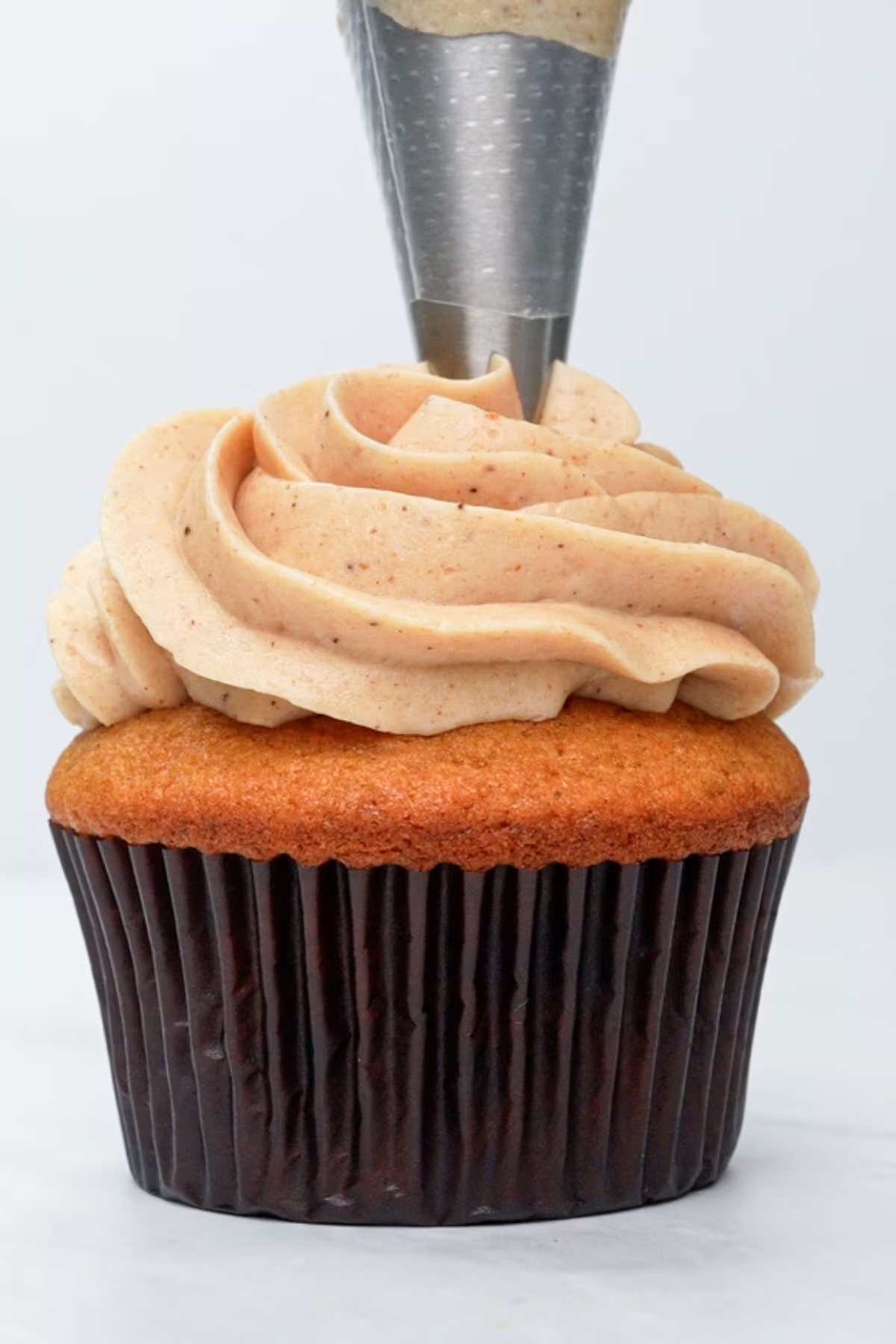
Brown Butter was a highly requested flavor modification for my cream cheese frosting, with the issue being that cream cheese frostings, particularly the brown butter versions, were too runny to pipe and frost with. I immediately knew the source of the issue, and the gist is that we are working with two structurally unstable components in a single frosting: cream cheese and brown butter. Not an easy feat.
Let’s start with the base of this recipe: cream cheese frosting.
Why are cream cheese frostings runny or loose?
If you’re just icing cinnamon rolls (or another dessert) or don’t need structure, pretty much any cream cheese frosting/icing will work just fine. But in cases where you need some structural integrity either for piping, holding up cake layers, or smoothing the outside of a cake, you probably can’t just mix butter, cream cheese, and powdered sugar however you like and expect it to hold up.
I’ve already tackled the issues with cream cheese in my Cream Cheese American Buttercream, which contains butter, powdered sugar, and cream cheese. Cream cheese contains a substantial amount of water held in a soft, stabilized structure that commonly includes gums and other <span class="def-term" data-term="hydrocolloid">hydrocolloids</span>. When you mix cream cheese aggressively or combine it directly with a large amount of sugar, that structure can loosen and release water. Sugar is particularly problematic because it readily dissolves into that available water, creating a concentrated syrup that can dramatically thin the frosting.
My solution is to mix the butter and powdered sugar first, then add the cream cheese. This gives us a much more structurally sound buttercream base before introducing the cream cheese and its water.
This will serve as the foundation for keeping our frosting dependably thick and structurally sound.
Why is brown butter so hard to use in frostings?
Brown butter is tricky to use in frosting because browning changes how the butter behaves, so you can’t use it the same way you would regular butter. So when I see frosting recipes where all the butter is substituted with brown butter, I expect a massive decline in stability. Which, again, is totally fine if structural integrity is not a priority.
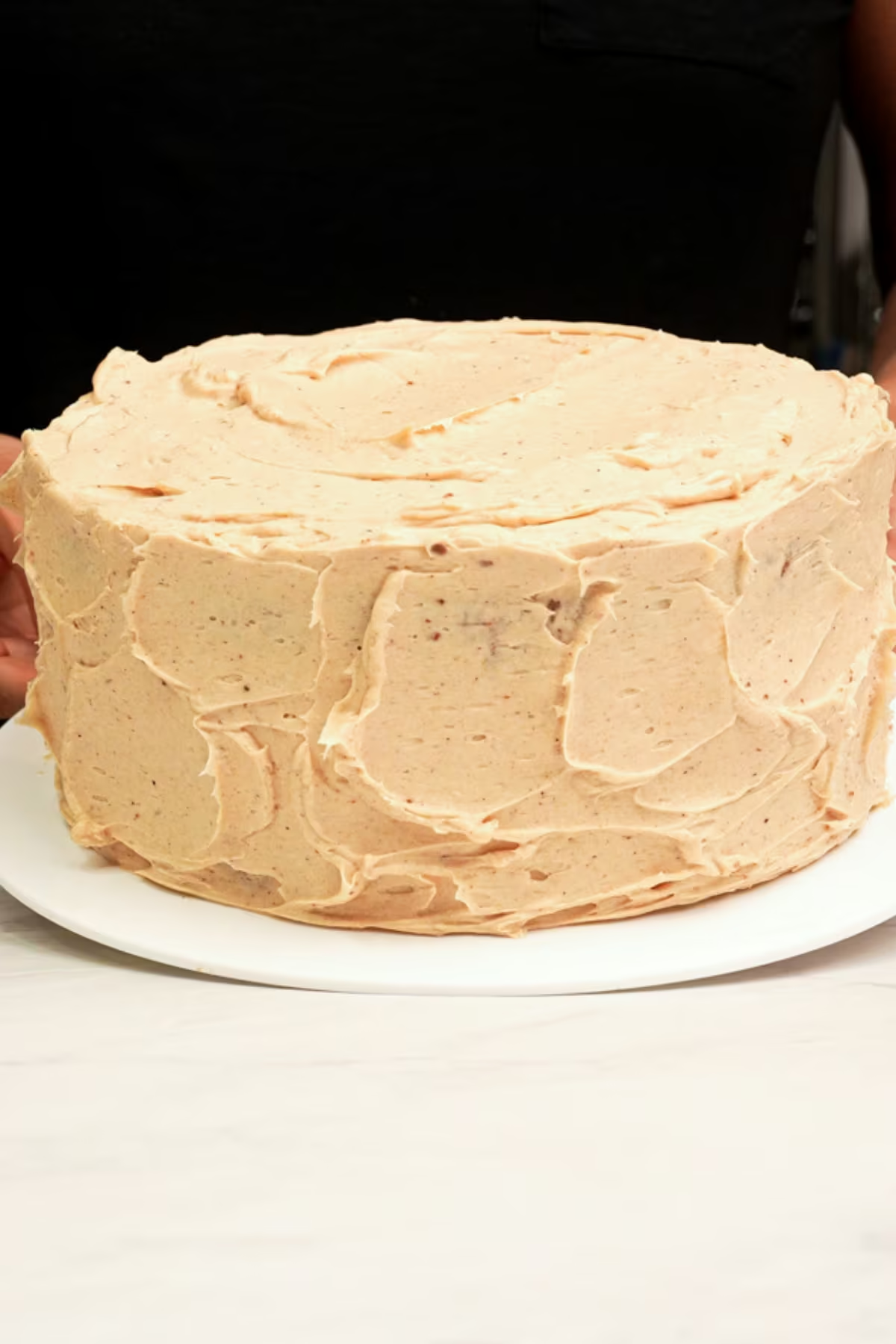
However, if we need a more stable brown butter frosting, we have to treat the brown butter as a flavoring component added to the structural ingredients rather than as a structural ingredient. In other words, brown butter cannot replace butter 1:1 in a buttercream you plan to frost or pipe with.
Browning butter requires heating it long enough for most of its water to evaporate. Once that water is largely gone, the milk solids can reach temperatures where <span class="def-term" data-term="maillard-reaction">Maillard reaction</span> proceeds rapidly, creating toasted, nutty flavors. Along the way, the butterfat completely melts.
That last part is especially important for frosting.
Regular butter contains a network of solid, <span class="def-term" data-term="crystalline">crystalline</span> milkfat that helps give butter, and therefore buttercreams, their structure. Browning completely melts those fat crystals and erases that pre-existing crystal network. And although the butterfat can crystallize again as it cools, simply chilling brown butter does not necessarily recreate the same crystal structure and physical properties it had before browning. Controlling fat crystallization precisely requires careful temperature management, which is difficult to reproduce in a home kitchen. (I’ve yet to do it.)
The other part of this puzzle is that we don’t want to add too much brown butter, as this will make the frosting overly loose. With soft, fat-rich flavor additions such as brown butter, nut butters, or chocolate-hazelnut spreads, there is a practical limit to how much I can add before the buttercream becomes too soft. In this recipe, since we have to stay within a certain range, I decided to increase the brown-butter flavor by making Super Brown Butter. It gives us a much more concentrated toasted-butter flavor without requiring as much brown butter, so we can still preserve the frosting’s structure.
I will teach you all of these things, but first, let’s go over what you can expect from this frosting.
What is the texture and flavor of my Brown Butter Cream Cheese American Buttercream?
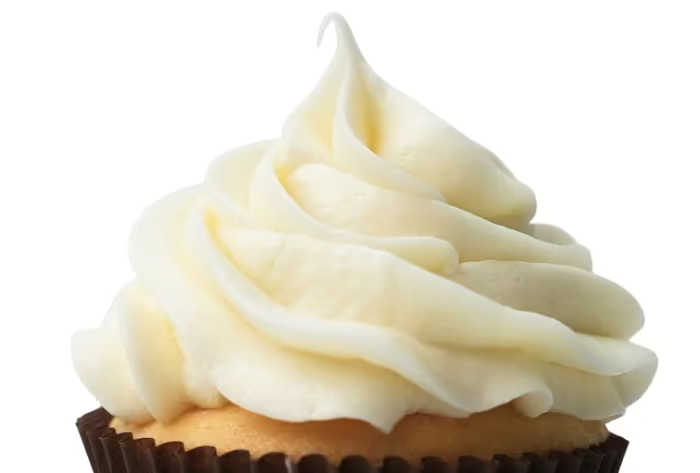
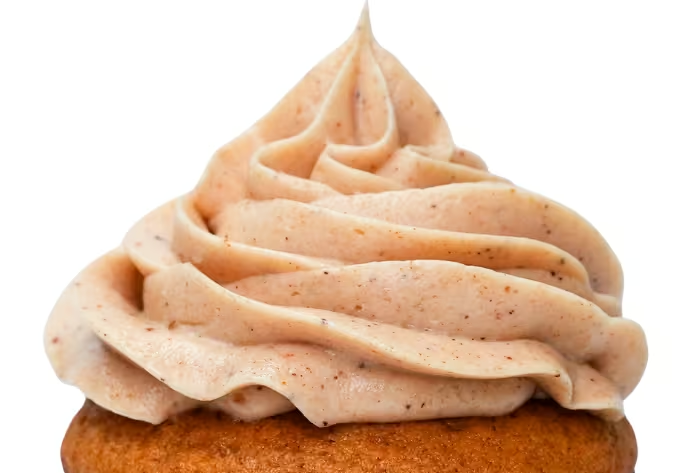
The final texture of my Brown Butter Cream Cheese American Buttercream is creamy and smooth on the palate. Because it includes both brown butter and cream cheese, it has a much lighter texture than its parent recipe, my Cream Cheese American Buttercream. I would describe the texture like a slightly heavier version of Ermine Buttercream, if you’ve ever tried that one.
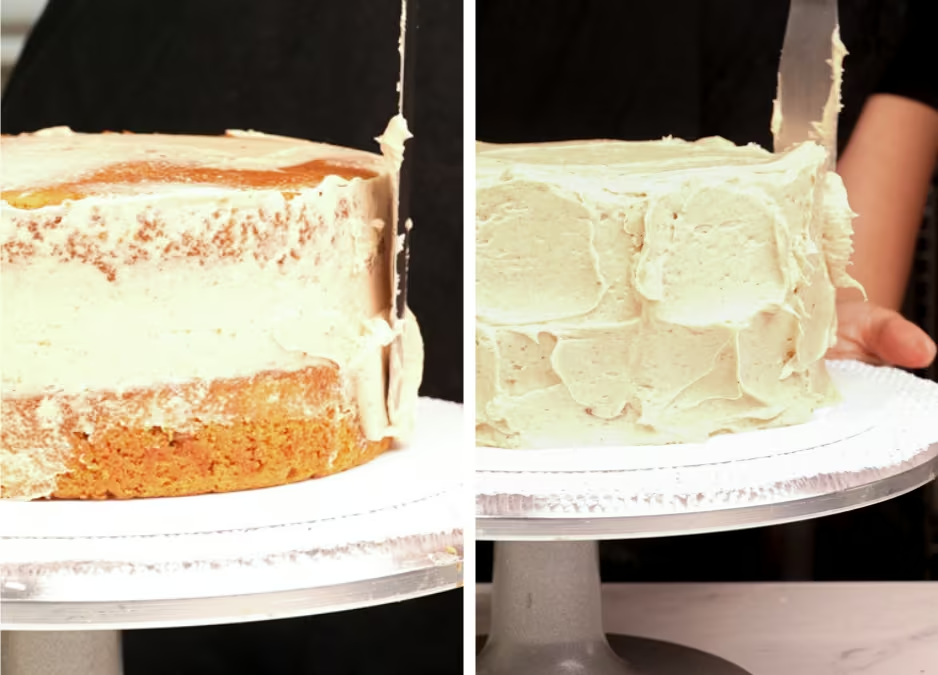
As for the pressure stability, because of the softness of the cream cheese and the inclusion of a fat (brown butter) that does not solidify like regular butter, the overall firmness of this buttercream is a bit softer than any of my emulsion-based buttercreams (American Dreamy Buttercream, Swiss Meringue Buttercream, etc.). That being said, I still formulated this recipe so that it can hold up cake layers and pipe firm designs.
As you can see above, I can thickly fill a pumpkin spice layer cake and frost the outside with no issues.
What is the flavor and taste of Brown Butter Cream Cheese American Buttercream?
Flavorwise, you’re going to taste a complex nutty, toasted dairy flavor first, followed by a sweet acidity from the cream cheese. This frosting is what I would call “well-rounded” in that you’re going to set off a lot of taste sensors on your palate - we’ve got sweetness from the sugar, saltiness from the cream cheese and salt, a bit of savoriness from the brown butter, and a touch of sour from the cream cheese.
What ingredients do you need for Brown Butter Cream Cheese American Buttercream?
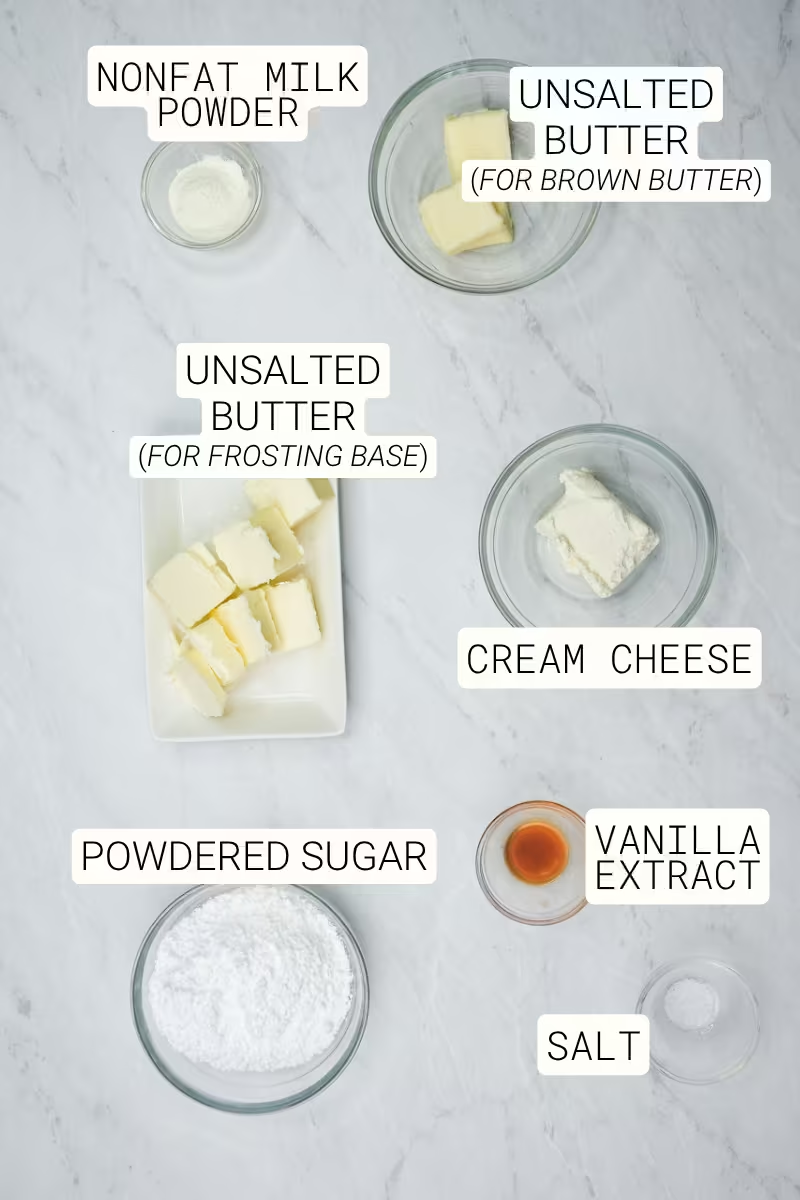
NONFAT DRIED MILK POWDER adds extra milk solids to the Super Brown Butter. The milk proteins toast in the hot butterfat, creating a deeper brown-butter flavor and more of those nutty, caramel-like notes. I prefer nonfat dried milk powder over other kinds of dried milk, such as whole or sweet cream buttermilk powder, which you may see me use in other recipes on this site.
Nonfat milk powder is especially concentrated in the milk proteins and <span class="def-term" data-term="lactose">lactose</span>, and therefore will provide a bit more flavor from the <span class="def-term" data-term="maillard-reaction">Maillard reaction</span>. Whole and sweet cream have a bit of fat, which tends to clump more easily during the process. And don’t try malted milk powder - it seemed like a good idea when I tested it, but that one has so much sugar that it clumps almost instantly when it hits the hot butterfat.
UNSALTED BUTTER is used in two portions for this recipe, so be sure to pay attention to my labeling. The one labeled “for Super Brown Butter” is the smaller amount and will be melted and used to fry/toast the milk powder. Because browning melts the butter’s original fat-crystal network and removes much of its water, I treat this brown butter primarily as a flavoring component rather than relying on it for the frosting’s structure.
The larger amount of butter labeled “for Frosting Base” provides the structural part of the frosting that will mix with the powdered sugar.
CREAM CHEESE gives the frosting its characteristic tang and creamy texture. Keeping it cold initially keeps the frosting from becoming overly runny at the end. Keeping the cream cheese cold keeps more of its fat solid and helps it stay firm, which reduces how much it softens the frosting during mixing.
POWDERED (CONFECTIONER'S) SUGAR sweetens and thickens the frosting. Its very fine particles dissolve and disperse easily in the butter, helping create a smooth texture.
VANILLA EXTRACT and SALT are flavor components. The salt tempers the sweetness while the vanilla adds warm aromatic notes that complement the toasted, nutty flavors of the Super Brown Butter.
Step by step:
Note: Don’t pay attention to how the quantities look in this tutorial. I was making a super big batch of the Super Brown Butter for testing, and so it looks like I’m adding a lot to the final buttercream. However, the technique and textures will still be the same.
STEP 1 | Prepare the Super Brown Butter.
WHY:
Browning butter is a cooking process where butter melts, most of its water evaporates, and the residual milk solids toast in the butterfat. Much of this flavor development comes from the <span class="def-term" data-term="maillard-reaction">Maillard reaction</span>, which can create nutty, caramel-like flavors. Whenever I brown butter at home, my kids always ask what I’m baking because I think they associate this aroma with my chocolate chip cookies.
Now, butter straight out of the wrapper contains only about 1% protein. Super Brown Butter is a method I use when I want to concentrate those brown-butter flavors even further by adding extra milk powder, which effectively increases the total amount of milk protein available for browning by roughly seven- to eight times.
I especially like this technique over simply roasting or toasting dried milk solids on their own because the aroma compounds created during browning vary in their solubility. Some are more soluble in water, while others are more soluble in fat. By browning the milk powder directly in the butterfat, we create those toasted flavors within a fat-rich environment, allowing fat-soluble aroma compounds to dissolve into and flavor the butterfat itself. That flavorful fat then gets dispersed throughout the frosting, carrying brown butter flavor into every bite.
Chill the brown butter to about 60°F/15°C or below to develop a firmer texture. As we talked about earlier, the milkfat will crystallize again as it cools. However, it won’t necessarily rebuild the same fat-crystal structure it had in regular butter, so it may still feel softer at the same temperature.
If you don’t want to use a thermometer, refrigerate it until it feels nice and firm. If anything, err on the side of too cold rather than too warm.
HOW:
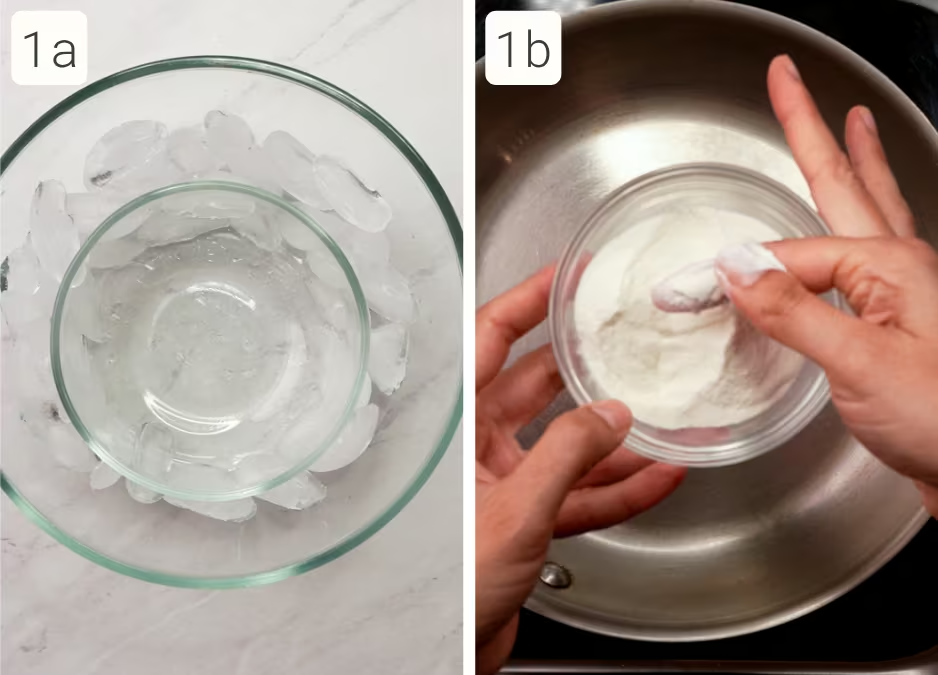
Fill a large bowl with ice water and place a smaller heatproof bowl inside to hold the hot brown butter. The ice bath speeds cooling so you can proceed with the recipe right away (1a). If making the Super Brown Butter ahead of time, you can skip the ice bath and simply set aside a heatproof bowl to cool at room temperature. Sift the milk powder into a small bowl to remove any lumps (1b). I’m using Bob’s Red Mill Nonfat Milk Powder, which is very finely powdered. (Sorry, I don’t like to be brand specific, but this is a good ethical brand to support that I really like the quality of.)
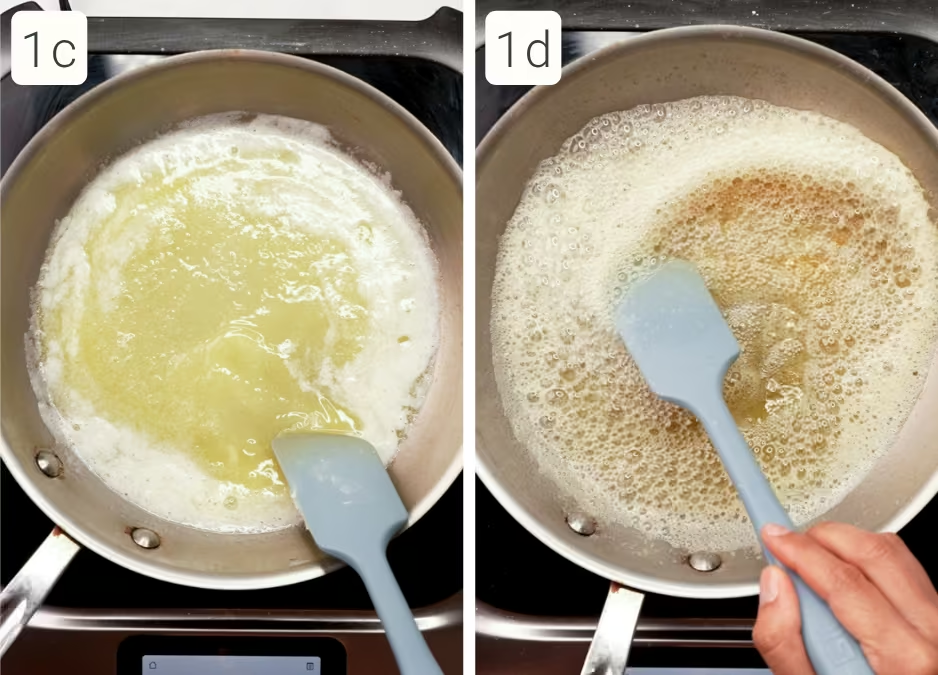
Add the unsalted butter labeled for Super Brown Butter 🧈 to a light-colored pan (it’s easier to visualize the progress this way) and melt over medium heat (1c). The butter will foam as its water turns to steam; milk proteins help stabilize those bubbles at the surface as the water evaporates. If it sputters excessively, reduce the heat. Stir continuously with a silicone spatula, scraping the bottom and sides of the pan to keep the milk solids from sticking or burning. Continue cooking until the milk solids are light brown. See them at the bottom of my pan? That’s where they like to hang out, so you need to scrape constantly (1d).
Remove the pan from the heat immediately.
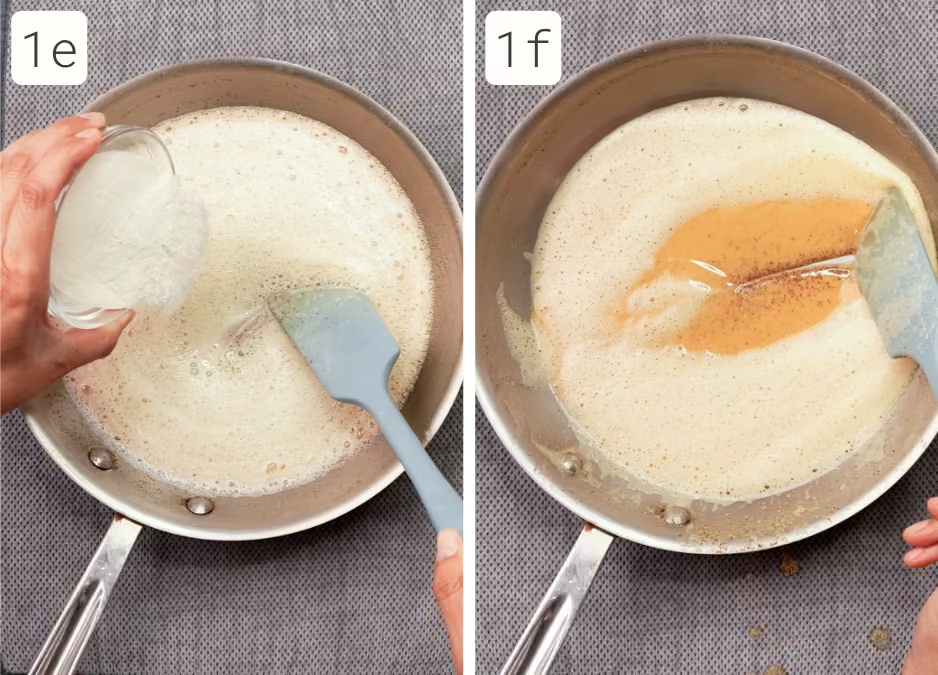
We’re going to add the sifted milk powder very gradually, stirring the entire time (1e). Sprinkle some on the surface, stir, and repeat until you've added all the milk powder. You may get some clumps; that’s ok, just smash the big ones and make sure they’re not bigger than a grain of rice. Notice how my brown butter now looks kind of cloudy or the color of a very milky latte/cappuccino (1f).
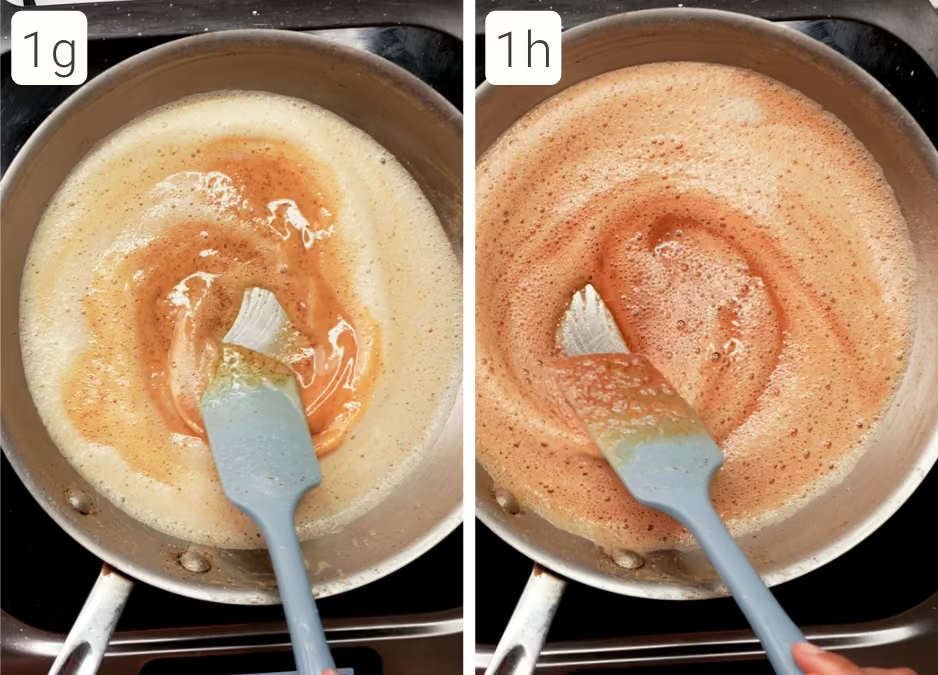
Return the pan to medium heat (1g). You can stop at any time; use the color as a guide. The darker you go, the more intense the toasted flavor. It’s like toasting bread in the toaster :) Everyone is different. I like to heat mine until it’s a darkish amber color.
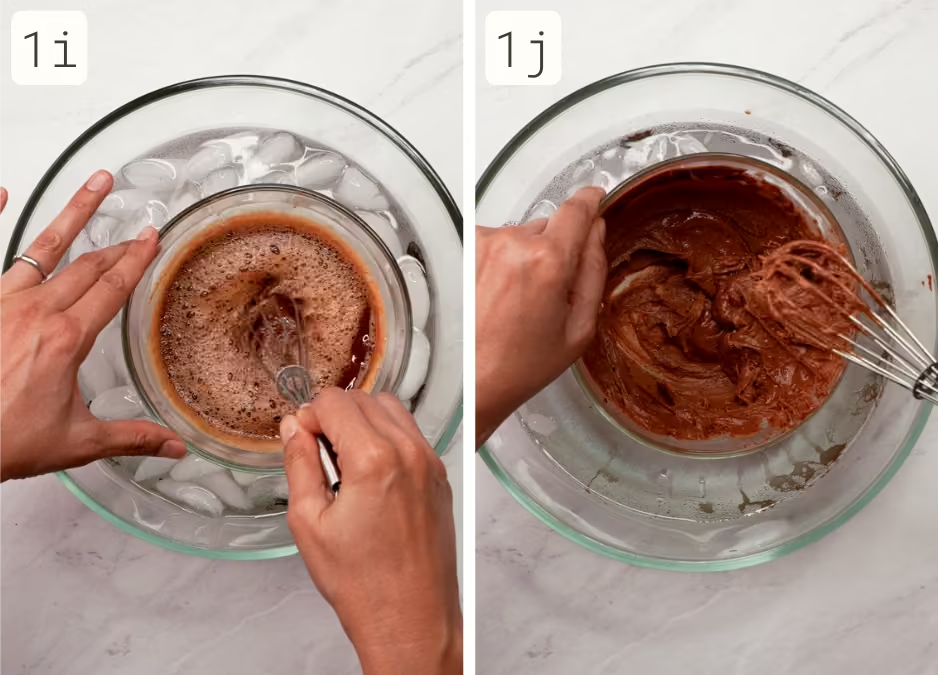
Immediately scrape the Super Brown Butter into the prepared heatproof bowl.
If using an ice bath, stir the mixture every 5–10 minutes. Remove the bowl from the ice bath once the Super Brown Butter has cooled into a very thick, spreadable paste.
Ideally, it should be below 60°F/15°C before you use it in the frosting.
STEP 2 | Combine the Super Brown Butter and cold cream cheese.
WHY:
It’s really important to add the flavoring components (the cream cheese and brown butter) last in this buttercream. We’re going to mix those two first to fully distribute the brown butter, which may have separated into butterfat on top and brown milk solids on the bottom as it chilled.
Because this mixture contains very little sugar, we can mix the cream cheese and brown butter without the same degree of loosening we’d expect with a large amount of sugar. Once we add this mixture to the Frosting Base, though, we want to mix as little as possible and just until everything is evenly combined. This helps us preserve as much of the cream cheese’s structure, and therefore the frosting’s structure, as possible.
HOW:
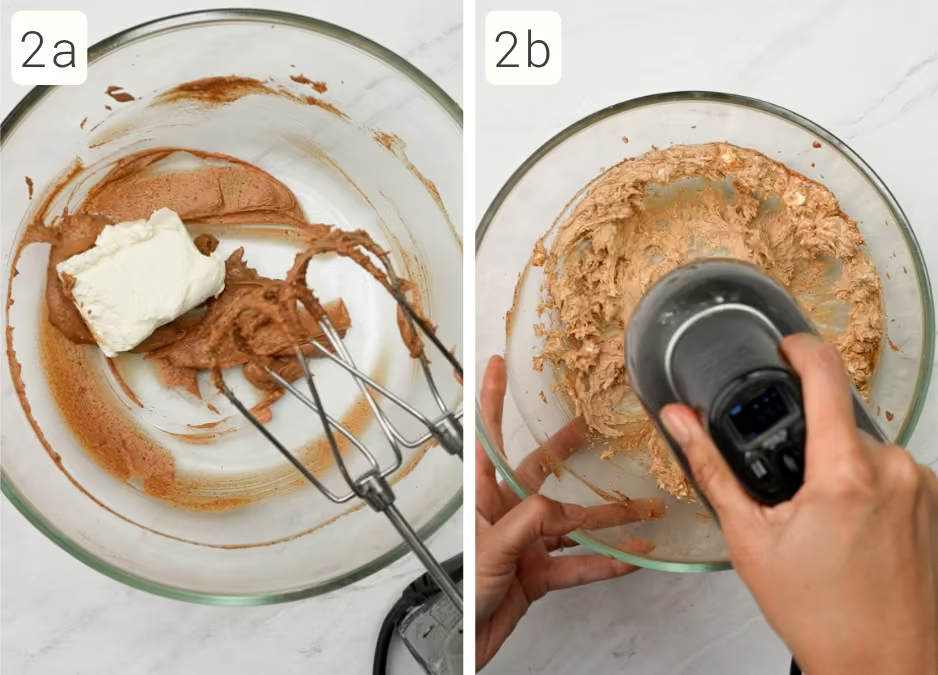
Add the cooled Super Brown Butter to a large mixing bowl; you may see that the solids have collected at the bottom of the bowl, which is fine. Just scrape it all in. Mix on low speed until creamy. Add the cold cream cheese and mix on low speed until completely combined (2a, b).
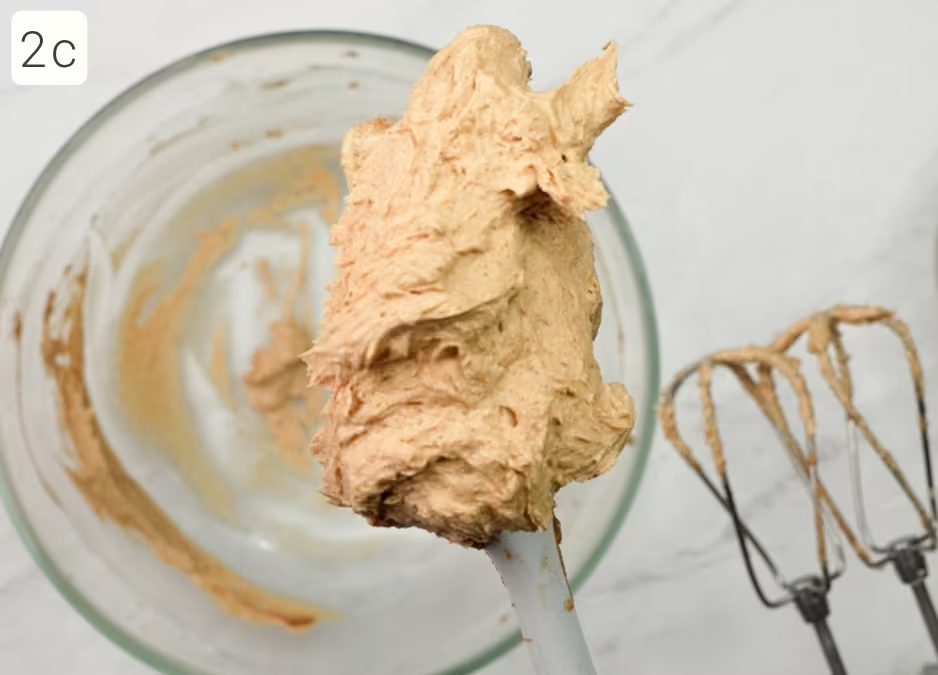
The cream cheese-brown butter should be tan with little specks from the extra toasted milk solids. Transfer the Super Brown Butter–cream cheese mixture back to the bowl you used for the brown butter (2c). Keep it in the refrigerator while you prepare the frosting base.
STEP 3 | Mix the butter and powdered sugar.
WHY:
Making the butter-sugar base separately lets us incorporate the powdered sugar into the butter before adding the water-rich cream cheese. This helps limit direct contact between the sugar and cream cheese, which can otherwise loosen the frosting. Adding the powdered sugar gradually also makes it a little easier to mix in.
HOW:
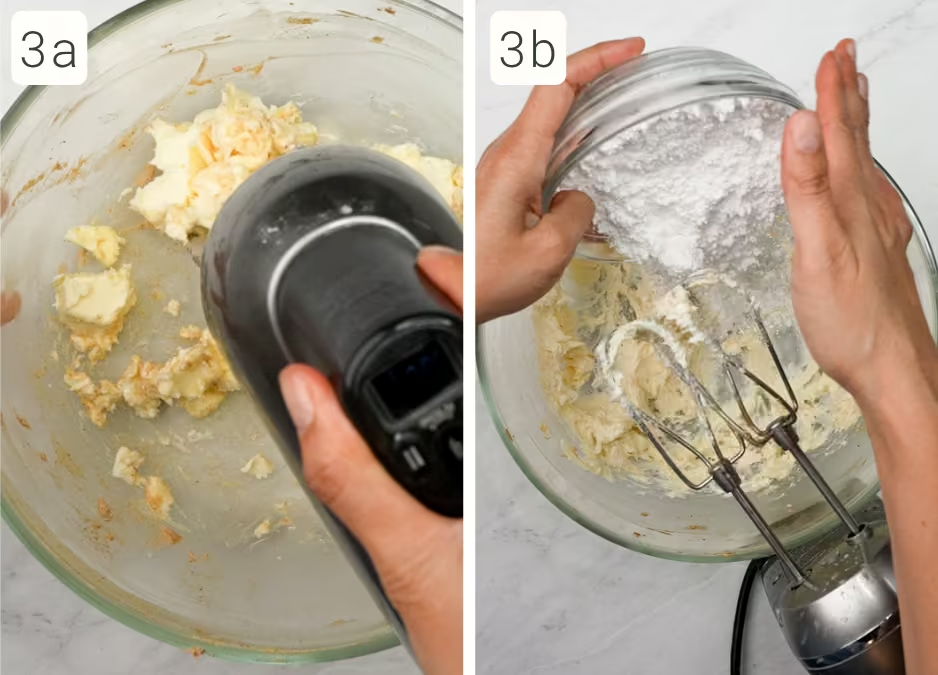
Cut the unsalted butter labeled for Frosting Base 🧁 into chunks so it mixes more easily. Add it to the same mixing bowl—there’s no need to wash it—and mix with the paddle attachment on medium speed until smooth (3a). Add about one-third of the powdered sugar; no need to be exact. Mix on low speed until combined, then add another third and repeat (3b).
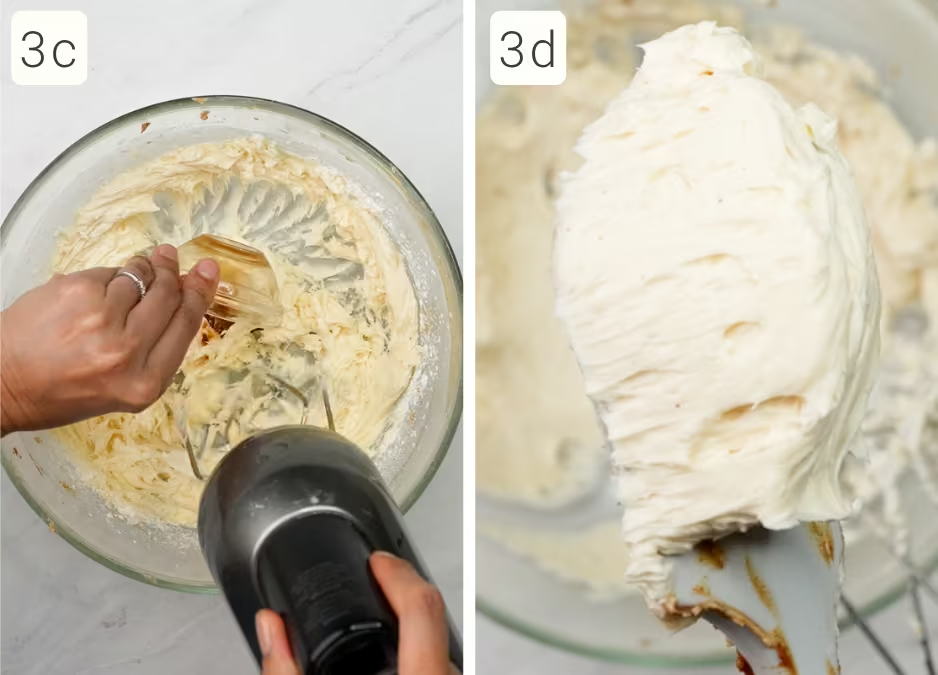
With the final addition of powdered sugar, add the vanilla and a pinch of salt (3c). The Frosting Base should be pale, slightly aerated, and creamy (3d).
STEP 4 | Finish the frosting.
WHY:
Cream cheese contains much more water than butter so prolonged mixing can soften the frosting. Adding the chilled cream cheese mixture last and mixing only until combined helps maintain a thicker, more stable texture.
HOW:
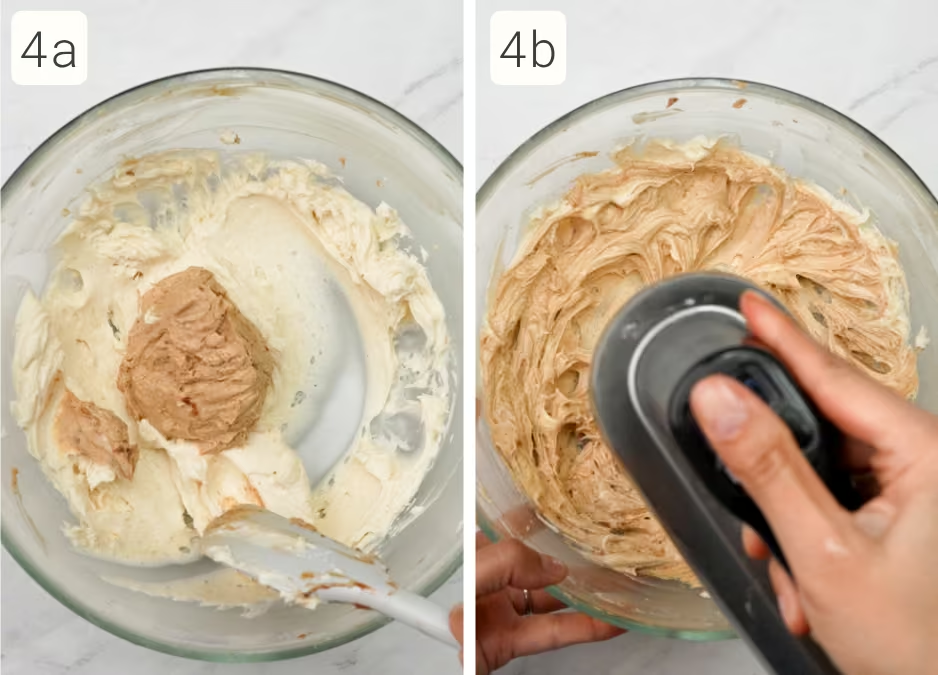
Add the chilled Super Brown Butter–cream cheese mixture to the butter-powdered sugar mixture (4a). Mix on low speed until almost fully combined (4b).
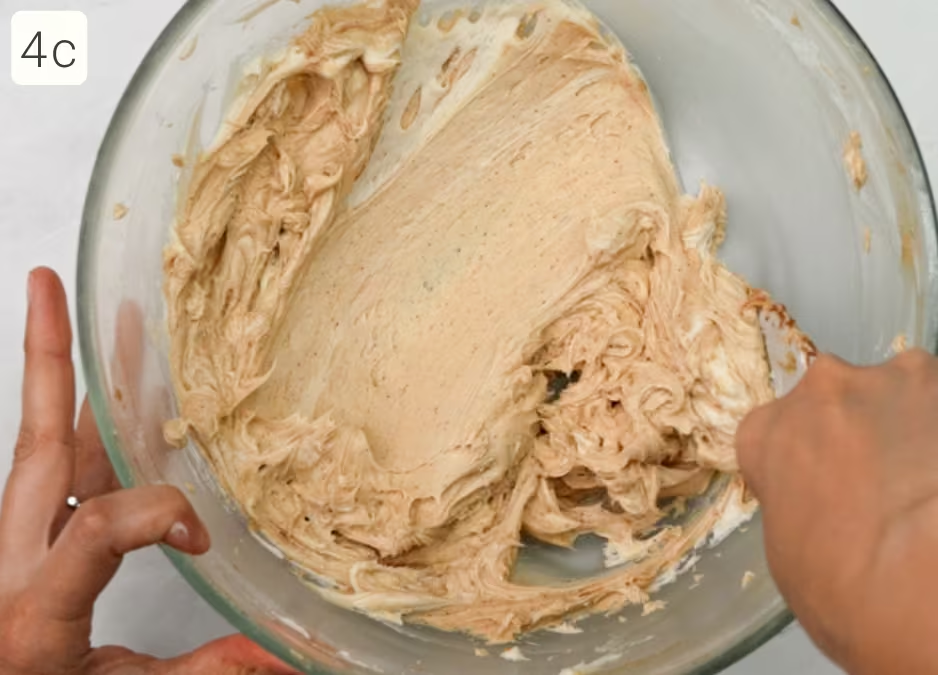
I like to finish blending with a spatula rather than continuing to mix with the mixer, as this reduces mixing, which can create an overly runny frosting. However, a slight thinning after the cream cheese-brown butter mixture has been added is completely normal. This is because we’ve increased the ratio of less stabilized fats to the frosting.
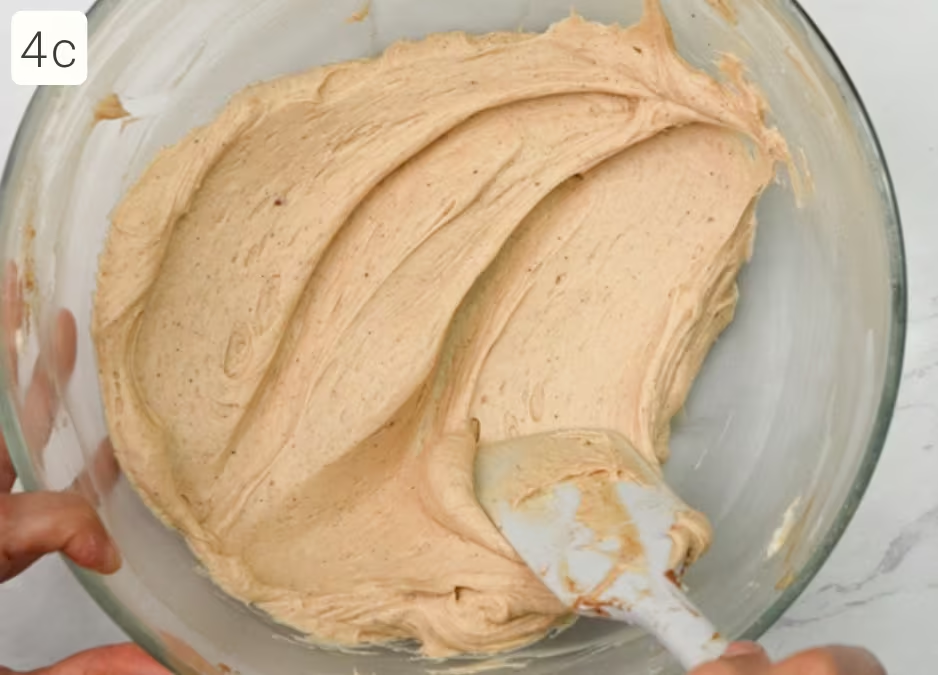
The final frosting should be smooth and creamy (4c).
Use immediately.
Make Ahead and Storage Tips
Because both brown butter and cream cheese are unstable as frosting inclusions, I don't recommend making this frosting in advance. I often make my frostings days in advance and store them in plastic wrap. Then, about an hour before I need it, I’ll thaw it at room temperature and throw it in my mixer to smooth it out before using. Unlike my other buttercreams, I haven’t found this frosting to recover its original texture reliably after thawing and remixing; remixing can make it overly runny or curdled.
Instead, make the Super Brown Butter in advance and make the rest of the frosting the day you need it. You can make the Super Brown Butter weeks in advance if needed. Just store in plastic wrap in the refrigerator. On the day you need this frosting, smooth out the chilled Super Brown Butter in your mixer. You can do this while it's still cold because Super Brown Butter doesn't get as firm as regular butter. Then proceed with the recipe, which is almost identical to my Cream Cheese American Buttercream. Usually, that recipe takes me less than 10-15 minutes to throw together once I've weighed all my ingredients.
Once you make your frosting, use it immediately. This reduces the risk of having to remix the frosting for any reason, which may mess up the consistency. Once the frosting is on the cake, chill the cake to set the frosting. Once it's on the cake, it should be stable enough to support your cake layers and intricate piping. Cream cheese-based frostings should normally be refrigerated within 2 hours of being left at room temperature, and this frosting will hold up beautifully during that time.
Did you know that you can create your own cake recipe with my Brown Butter Cream Cheese American Buttercream?
I have a tool for you to try called the Cakeculator, which lets you customize cake flavors and pan sizes, and use this frosting to make a custom cake! I will list 1 ½-cup and 3-cup recipes for this buttercream in the recipe card down below, but you can choose other frosting sizes using the Cakeculator.
Some ideas to get you started:
- 4 ½ cups recipe for Brown Butter Cream Cheese Frosting (enough to frost a 2-layer, 8-inch cake)
- Pumpkin Layer Cake with Brown Butter Cream Cheese Frosting (8-inches, 2 layers)
- Two dozen Chocolate Indulgence Cupcakes with Brown Butter Cream Cheese Frosting
By the way, I also have a Non-Cream Cheese Brown Butter Frosting!
It’s my American Dreamy Buttercream flavored with Brown Butter. You’ll get a bit more stability since we’re only dealing with one destabilizing flavor component (brown butter vs. brown butter AND cream cheese).
Video
Honors Members Section
This extra material is accessible to Sugarologie Honors members.
Become a member to view extended research notes, technique analysis, and supplemental materials! Learn more about Sugarologie Honors here.
Already a member?
Before starting the recipe, please read this!
Measure by weight, if possible.
Measuring by weight is the best way for you to replicate my recipes. I develop recipes using ingredients (even liquids) measured in grams, which is why you see them listed first in the recipe cards. For measurements under 5 grams, I will typically only list the volumetric measurements (teaspoons, etc.), as most home scales are not precise for such small weights.
In most cases, I have converted grams to volumetric measurements (aka US customary units) for bakers who prefer this method. However, the measurements are not as precise and may have awkward proportions. The recipes should still work, but for the ultimate precision, try to use weight.
This is the OXO scale I use daily. I also purchased this budget version of a good scale, which I keep at my Mom’s house for baking. If you’re interested in other tools I use for my baking, I’ve compiled a list here.
Use room temperature ingredients.
All my ingredients should be used at room temperature, or 65-75 °F/18-24 °C. I will always indicate if you need something outside this range. If no details are given, room temperature is the default.
Pay attention to the ingredient descriptions.
I try not to be brand-specific, but I will always note an interesting result from a type of ingredient, be it negative or positive.
A specific note regarding salt: I use Diamond Crystal Kosher salt for everything on this site except for frostings. In frostings, you want the salt to dissolve more easily, and kosher salt tends to leave granules behind. If you substitute table salt (more finely granulated) for recipes that list kosher salt, you must use half the volume indicated in my recipes.
Substitutions are hard.
That said, substitutions aren’t impossible but can be the toughest part of recipe development. Small swaps, like reduced-fat milk (2% fat) for whole milk (3.5% fat), usually work fine. However, bigger changes—such as replacing oil with applesauce or sour cream with Greek yogurt—can significantly impact texture and density.
Be wary of general, all-purpose substitutions in baking; I find that usually there is never a one size-fits-all solution. I carefully select ingredients for my recipes, so for the best results, start with the original recipe and modify with caution.
Read all the recipe instructions before beginning.
I’m in the “Pre-read the Chapter before Class Lecture” club... and I invite you to join! Baking new recipes can be intimidating, so let’s set you up for success. I want you to think about timeframes. Most fillings and frostings can be made ahead of time, and give you an extra day for mental space. Also, as you become a more proficient baker, you can anticipate and recognize steps. (“Oh, this has a meringue step, so I’ll need an extra clean bowl…” etc.) Ensure you go down the ingredient list and have everything at the right temperature.
.avif)
.avif)
.png)

Brown Butter Cream Cheese American Buttercream
- 6 g (2 ¼ teaspoons) non-fat dried milk powder*
- 35 g (2 ½ tablespoons) unsalted butter (for Super Brown Butter 🧈)
- 57 g (¼ cup) full-fat cream cheese, cold from fridge
- 113 g (½ cup) unsalted butter, around 60°F/15°C (for Frosting Base 🧁)
- 75 g (½ cup + 2 tablespoons) powdered (confectioner's) sugar**, sifted if clumpy
- ¼ teaspoon vanilla extract
- Small pinch fine sea salt
For larger quantities or to pair with a cake recipe, go to my Cakeculator and choose “Browned Butter Cream Cheese American Buttercream.”
- 6 g (2 ¼ teaspoons) non-fat dried milk powder*
- 35 g (2 ½ tablespoons) unsalted butter (for Super Brown Butter 🧈)
- 57 g (¼ cup) full-fat cream cheese, cold from fridge
- 113 g (½ cup) unsalted butter, around 60°F/15°C (for Frosting Base 🧁)
- 75 g (½ cup + 2 tablespoons) powdered (confectioner's) sugar**, sifted if clumpy
- ¼ teaspoon vanilla extract
- Small pinch fine sea salt
For larger quantities or to pair with a cake recipe, go to my Cakeculator and choose “Browned Butter Cream Cheese American Buttercream.”
- 12 g (1 ½ tablespoons) non-fat dried milk powder*
- 70 g (5 tablespoons) unsalted butter (for Super Browned Butter 🧈)
- 113 g (½ cup) full-fat cream cheese, cold from fridge
- 226 g (1 cup) unsalted butter, around 60°F/15°C (for Frosting Base 🧁)
- 150 g (1 ¼ cups) powdered (confectioner's) sugar**, sifted if clumpy
- ½ teaspoon vanilla extract
- ⅛ teaspoon fine sea salt
For larger quantities or to pair with a cake recipe, go to my Cakeculator and choose “Browned Butter Cream Cheese American Buttercream.”
- Prepare the Super Brown Butter.
a. Set up an ice bath (optional but recommended).
Fill a large bowl with ice water and place a smaller heatproof bowl inside for the hot brown butter. This speeds cooling so you can proceed with the recipe right away. If making it ahead of time to cool for a longer period (up to a day in advance), just set aside a heatproof bowl to collect the hot Super Brown Butter.
b. Sift the milk powder into a small bowl to remove any lumps.
c. Brown the butter.
Before you start, I like to set aside a little pot holder or something to put your hot pan onto. You’ll need immediate access to it, so place it somewhere convenient.
Add the unsalted butter (labeled: for Super Brown Butter 🧈) to a light-colored pan and melt over medium heat. The butter will foam as the water evaporates. If it sputters excessively, reduce the heat. Stir continuously with a silicone spatula, scraping the bottom and sides to prevent the milk solids from sticking. Continue until the milk solids are light brown.
d. Toast the milk powder in the hot butterfat.
Turn off the heat and remove the pan from your heat source. Continue stirring while sprinkling in the sifted milk powder. It may clump, but that’s ok; just use the spatula to smash the big clumps. Little clumps (smaller than a grain of rice) are ok as those will dissipate with heat. The mixture should be opaque with milk powder and look like coffee with lots of creamer in it (very light tan).
Once all the milk powder has been added and is as evenly distributed as possible, return your pan to medium heat. Stir and cook until the liquid is a deep amber color.
e. Cool the Super Brown Butter.
Immediately scrape the Super Brown Butter into the heatproof bowl. If using the ice bath, stir every 5–10 minutes with your spatula. Remove the bowl from the ice bath once you have a very thick, spreadable paste. The temperature of your Super Brown Butter should ideally be below 60°F/15°C before adding it to your frosting.
- Combine the Super Brown Butter and cold cream cheese.
Once your Super Brown Butter has cooled down, add it to a large mixing bowl (if using a stand mixer, use the paddle attachment). Mix the Super Brown Butter on low speed until creamy. Sometimes you may see large clumps of milk powder, which I just smash with a spatula. Anything smaller than a grain of rice I don’t bother with, as it just gives the frosting a speckled look, which I like.
Mix the cold cream cheese into the creamy Super Brown Butter on low speed until completely combined. Remove the Super Brown Butter-cream cheese mixture from the mixing bowl into the bowl you used for your Brown Butter. I like to keep this mixture in the fridge while I prepare the next steps. - Mix the butter and powdered sugar.
Cut the unsalted butter, labeled (for Frosting Base 🧁), into chunks so it’s easier to mix, then add it to the same bowl (no need to wash it). Mix on medium speed with the paddle attachment until smooth.
Add about a third of the powdered sugar (no need to be exact) and mix on low. Once combined, add the next third and repeat. With the final addition, mix in the vanilla and a pinch of salt. Cream cheese is already salted, so I often start with a pinch here and adjust at the end. - Add cream cheese + super brown butter.
Add the chilled Super Brown Butter-cream cheese mixture to the butter-powdered sugar mixture and mix on low just until combined. Use a spatula to finish blending - it’ll thin out slightly as the cream cheese incorporates.
Taste for salt and adjust as needed. Use immediately.

Recipe Card - Adriana's Notes
*There are a few types of milk powder available (nonfat, whole, sweet cream buttermilk, malted, etc.), but the best one for this recipe is the nonfat variation. It is more concentrated in the milk proteins and lactose that participate in Maillard browning.
**Try to use the highest-quality powdered sugar you can find; these are typically labeled “10X” or higher. Generic brands tend to cut their powdered sugar with a higher ratio or coarser types of starch, which, when uncooked, can feel grainy or sandy in the final frosting. One American brand that works well for me is C&H.
.avif)

Got room for more dessert?
Subscribe to my Crumby Data newsletter! I share behind-the-scenes looks at recipe development, flavor testing for the Cakeculator, and life as a content creator. It’s free, lands in your inbox every few weeks, and you can unsubscribe anytime...no strings attached :)
Feel free to take a look at previous newsletters here!

.ico)