

Brownie Top Cookies (Thin, Fudgy & Crackly)


My Brownie Top Cookies are super-thin, ultra-decadent chocolate cookies inspired by the best part of a chewy-fudgy brownie: its delicate, shiny, crackly top. Instead of recreating an entire brownie as a cookie, this recipe focuses on that irresistible top layer, with its paper-thin crust and rich, fudgy chocolate underneath. This recipe is simple but effective; it shows how understanding the science behind a recipe can help us get exactly the qualities we want without adding unnecessary ingredients or steps.
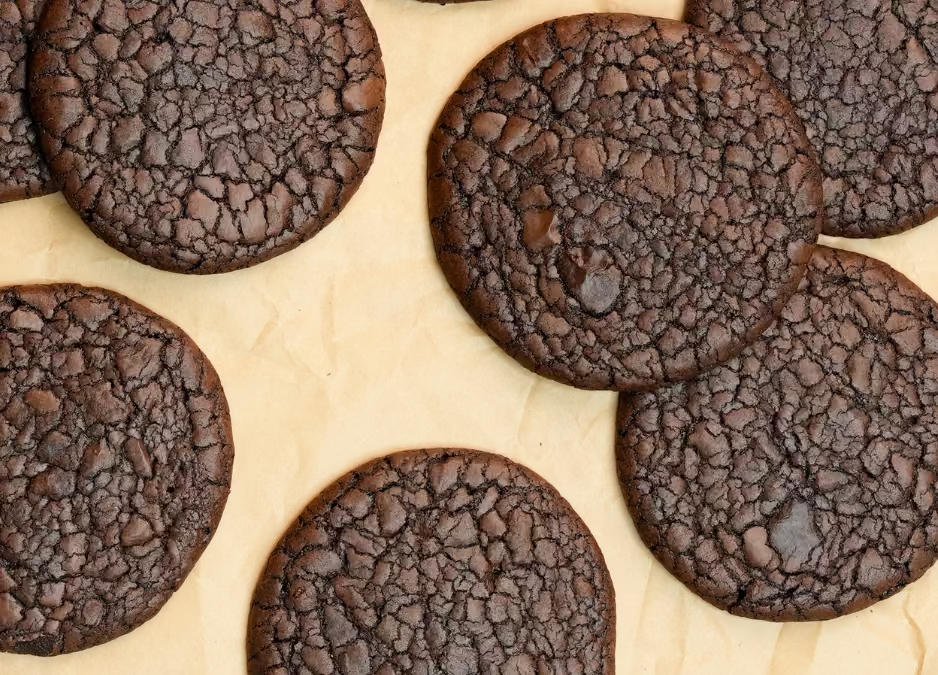
The key to my brownie-top cookie recipe is controlling the water content. By keeping water to a minimum and carefully balancing the sugar, fat, and chocolate, we can encourage that characteristic crackly surface without drying out the center.
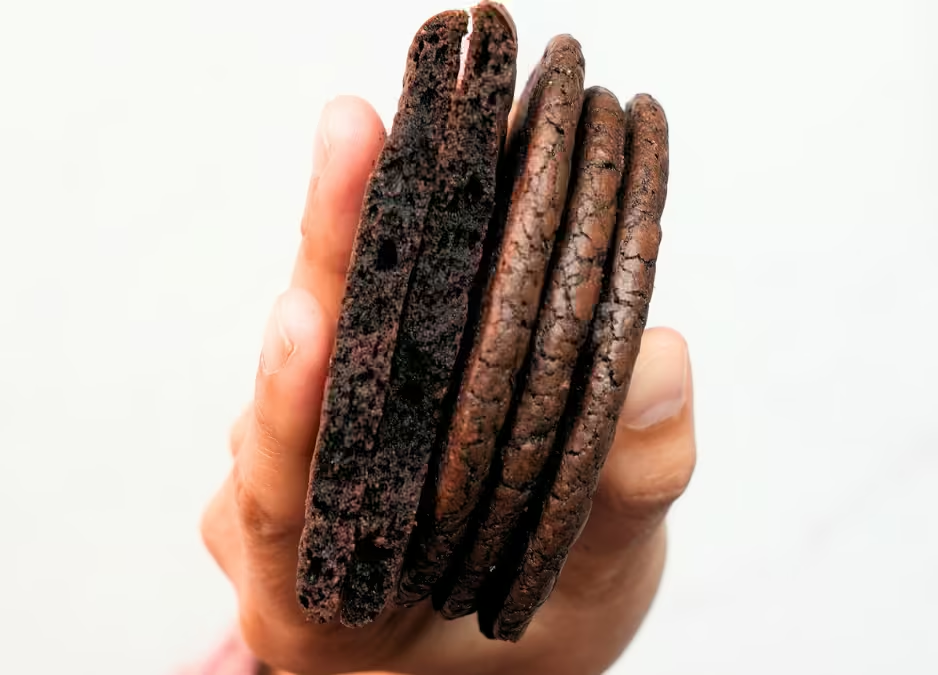
The result is a thin cookie with a delicate, crisp exterior that gives way to an intensely chocolatey, fudgy interior.
What ingredients do you need for my Brownie Top Cookies?
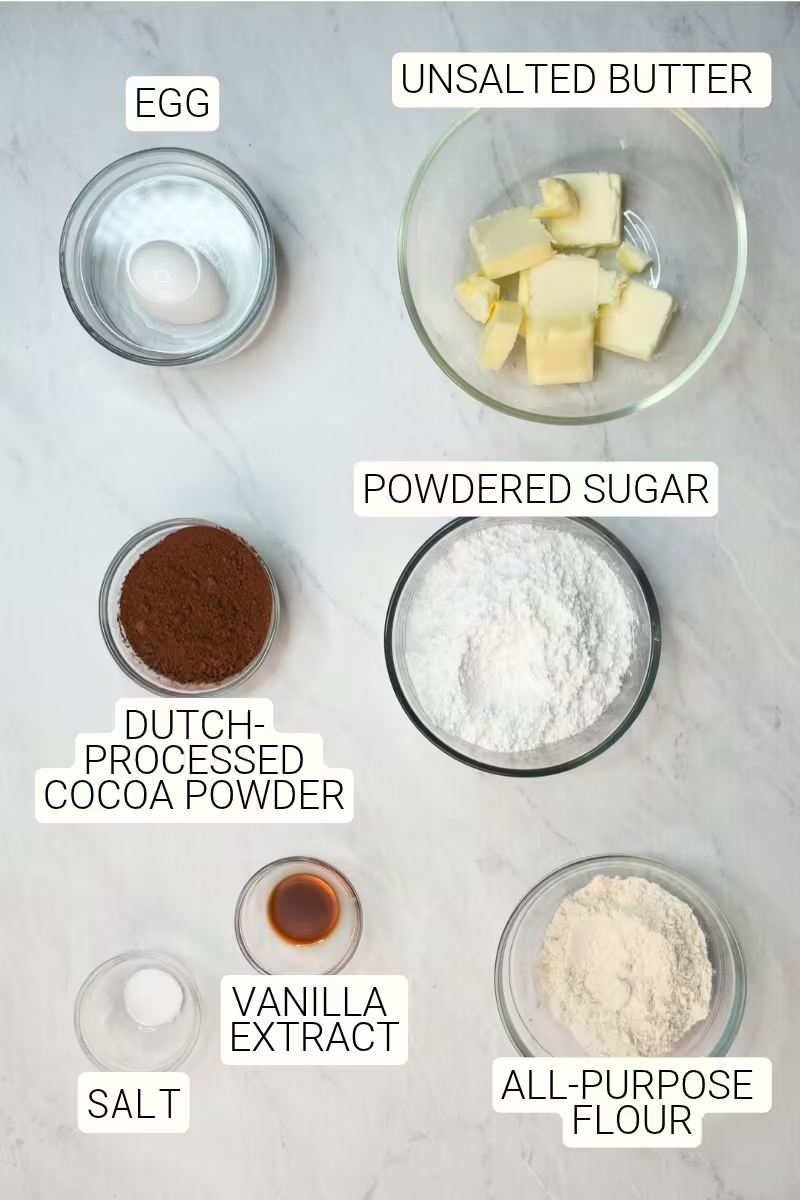
The EGG provides structure via its proteins, plus a bit of water to help dissolve the powdered sugar. Use a slightly warm egg; we’ll warm it by letting it sit in warm tap water, as shown in the picture above. Sucrose dissolves much faster in warmer water, which helps create the crackly top on the cookies.
UNSALTED BUTTER adds richness and creates a chewy, fudgy texture. We’ll first melt it and mix it with the Dutch-processed cocoa to bring out the cocoa flavor even more, as this distributes some of the fat-based cocoa aromatics into the butterfat and into every crumb of the cookie.
DUTCH-PROCESSED COCOA POWDER has been treated with an alkaline solution to reduce its natural acidity. This creates a darker color and a smoother, mellower chocolate flavor compared to natural cocoa powder. It also contains <span class="def-term" data-term="starch">starches</span> and fiber that absorb moisture and help give these brownie cookies their dense, fudgy texture.
POWDERED SUGAR provides sweetness and helps create the thin, shiny, crackly crust characteristic of brownie cookies. Its finely ground particles dissolve more readily into the egg mixture during whipping. As the cookies bake, the sugar-rich surface dries and forms a delicate crust that cracks as the cookies expand and deflate.
SALT balances the sweetness and enhances the chocolate flavor. It reduces the perception of bitterness from the cocoa while making the overall chocolate flavor richer and more pronounced.
VANILLA EXTRACT adds aromatic compounds that complement the chocolate flavor.
ALL-PURPOSE FLOUR provides structure through its starches and proteins. During baking, the starches absorb moisture, and the proteins help form a network that holds the cookies together. Because this recipe contains relatively little flour compared to the butter and sugar, the cookies remain thin, tender, and fudgy rather than thick and cakey.
Step by step:
STEP 1 | Prep the egg, oven, and baking tray.
WHY:
The crackly top on a brownie comes from the ratio of dissolved <span class="def-term" data-term="sucrose">sucrose</span> to water. Since the egg is the recipe's main source of water, we’ll encourage this characteristic by first warming it in hot tap water.
HOW:
Place your egg in the hottest tap water. Change the water a couple of times to warm the egg as much as possible without cooking it. The eggshell should feel warm to the touch when you’re ready to use it.
Preheat your oven to 350°F/180°C.
Line a baking tray with parchment paper.
STEP 2 | Melt the butter and mix it with the cocoa.
WHY:
Dutch-processed cocoa powder is a complex mixture of starches, fibrous plant material, proteins, and a tiny bit of fat from the cacao pod. Most of the time, I coax as much flavor out of this ingredient before baking to get the most luscious chocolate flavor in my baked goods. I do this by mixing the cocoa powder with hot, melted butter and whisking it into a rich, chocolatey liquid.
HOW:
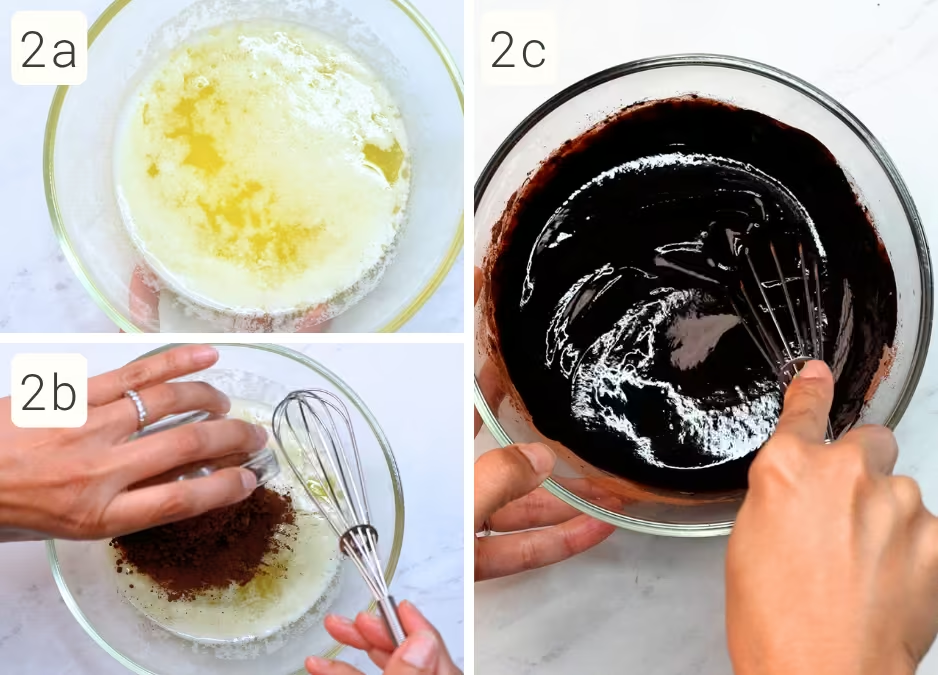
In a medium microwave-safe bowl, melt the unsalted butter (2a). Stir in the cocoa powder until it forms a thick, smooth paste. Set aside for now. (2b,c)
STEP 3 | Whip the warmed egg and powdered sugar.
WHY:
This step is key to developing shiny, crackly brownie tops. Mixing the egg and powdered sugar helps the sugar dissolve into the egg's water. During baking, the sugar-rich surface dries and sets into a thin crust. As the cookies expand and eventually deflate, this delicate crust develops its characteristic cracks.
HOW:

In a large mixing bowl, combine the warmed egg, powdered sugar, salt, and vanilla (3abc). Using a hand mixer, whisk on high speed for 2 minutes.
In (3a), I’m measuring how much a single egg weighs; you don’t have to do this, but sometimes I like to note its weight in case the crackly top isn’t as pronounced as I’d like it to be. If there’s too much water in the recipe, you won’t get the crackly top.
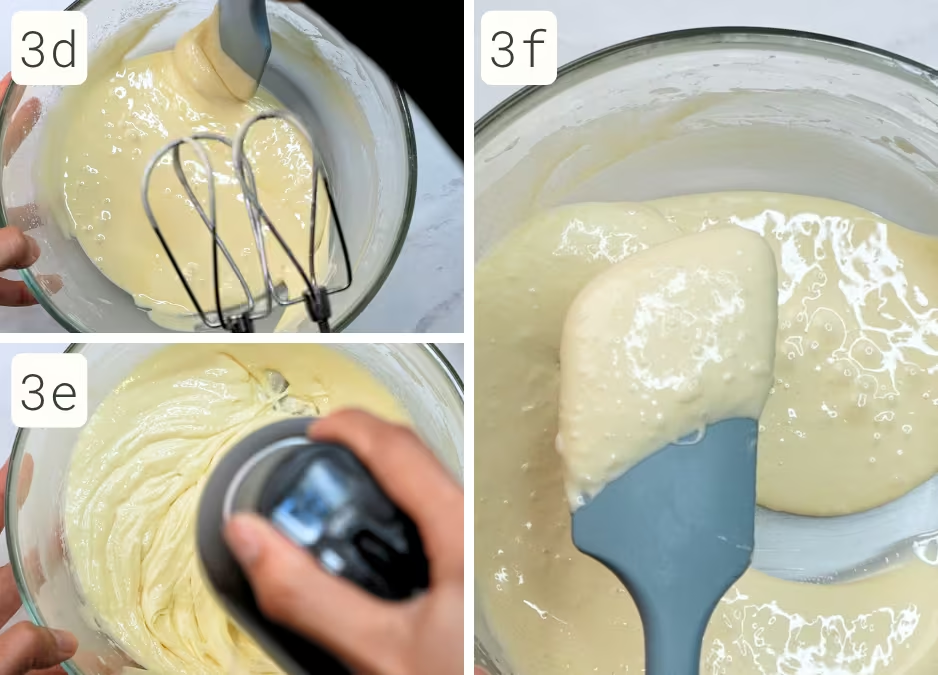
Scrape down the bowl once during this mixing step to ensure you’re getting all the powdered sugar from the sides and bottom of the bowl (3d). Continue mixing until the mixture becomes slightly thicker and paler. (3e,f)
STEP 4 | Stir in the remaining ingredients.
WHY:
For this step, mix by hand, so put away the hand mixer! Overmixing will disturb the wonderful sugar syrup we just created, so we’ll use a spatula for the rest of the recipe.
HOW:
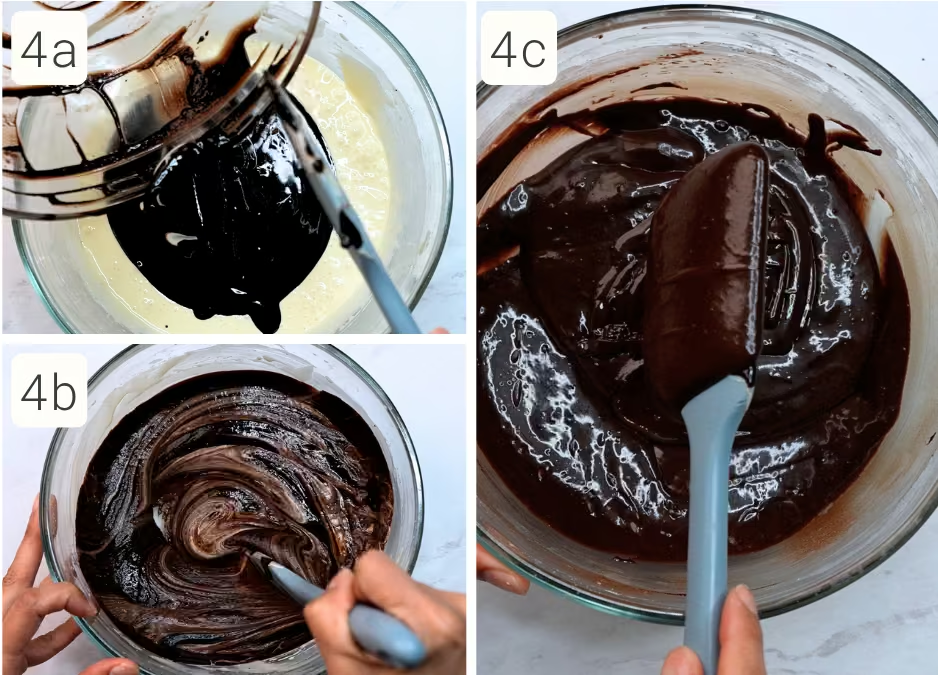
Using a spatula, stir in the melted butter and cocoa powder mixture until the batter is slightly thickened, glossy, and evenly textured (4a,b,c).
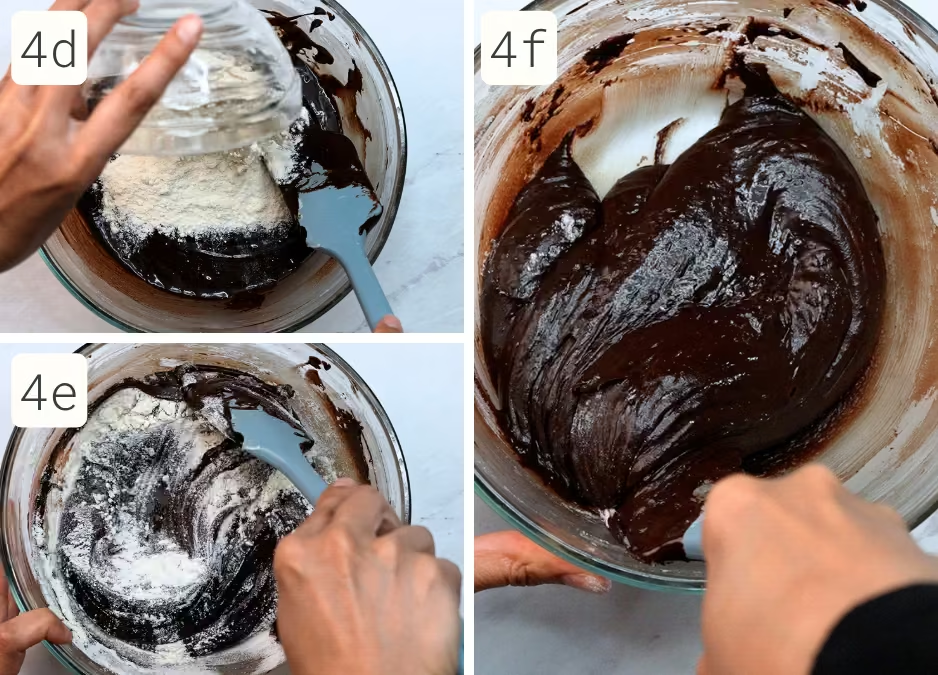
Add the all-purpose flour (4d) and stir just until combined (4e,f). The final brownie cookie batter will be thick and very glossy.
⚠️ Potential Pitfall: To ensure you get a beautiful rounded cookie with a crackly top, this batter needs to be scooped immediately. I've found that letting this batter sit too long can interfere with forming the shiny crust. Changes in batter temperature, viscosity, and sugar distribution may contribute to this effect. The cookies will still taste delicious, but their tops may be less pronounced.
STEP 5 | Scoop and bake for 10–12 minutes.
WHY:
Spacing the cookies apart gives them room to spread without touching. These cookies spread very thin, so space them out as shown in my photographs to prevent them from fusing during baking.
HOW:
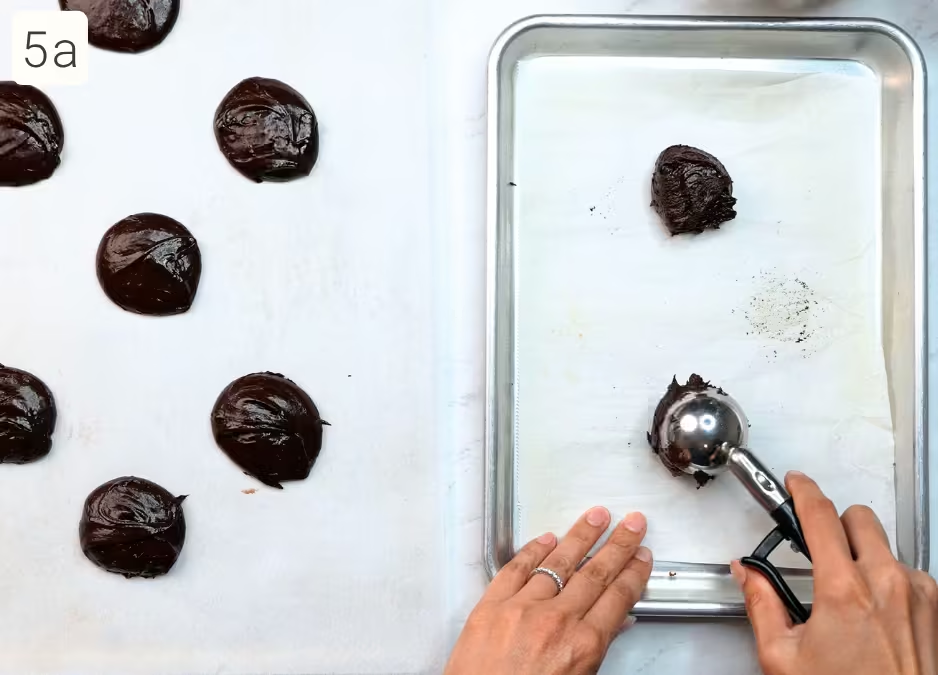
Use a 1 ½ tablespoon (#40) scoop to portion the brownie cookie dough into mounds on your prepared baking tray, spacing them about 2–3 inches apart (5a). I can bake up to 10 cookies on my big flat tray.
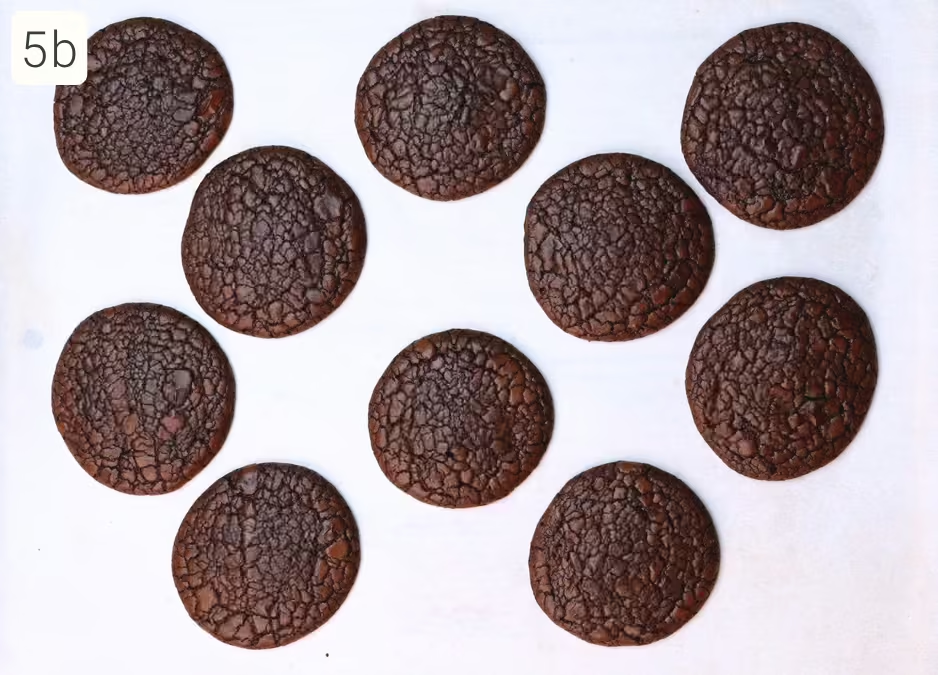
You’ll know your cookies are done when they have spread into flat, thin circles and are slightly puffy with crackled tops (5b).
STEP 6 | Cool the cookies on the tray.
WHY:
These cookies are especially delicate when hot because their structure hasn't fully firmed up. Letting them rest on the baking tray gives the starches and proteins time to set as they cool.
HOW:
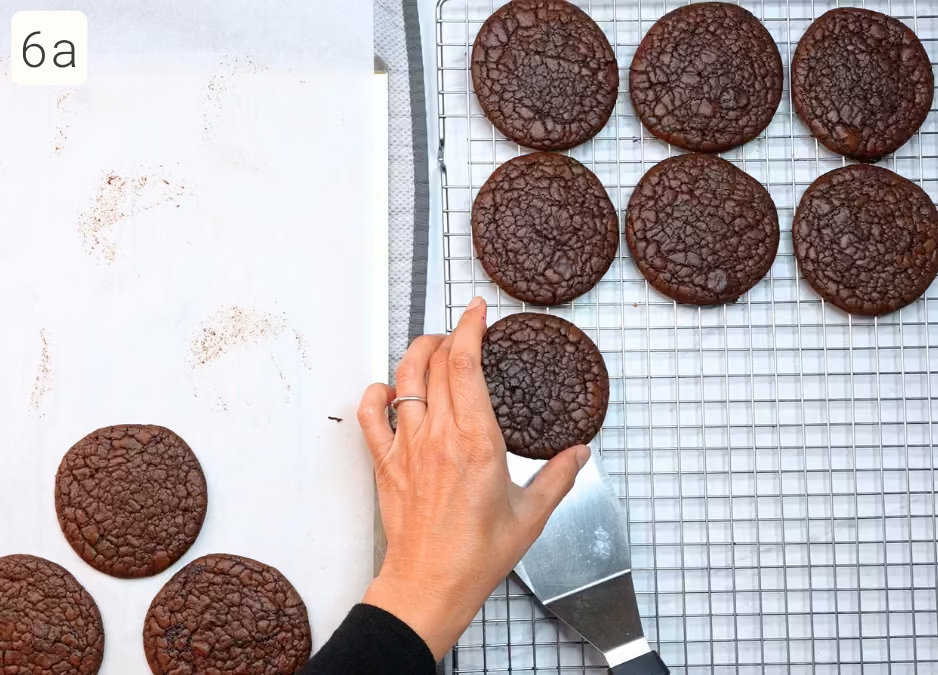
Let the cookies sit on the baking tray for 3–5 minutes before transferring them to a cooling rack (6a).
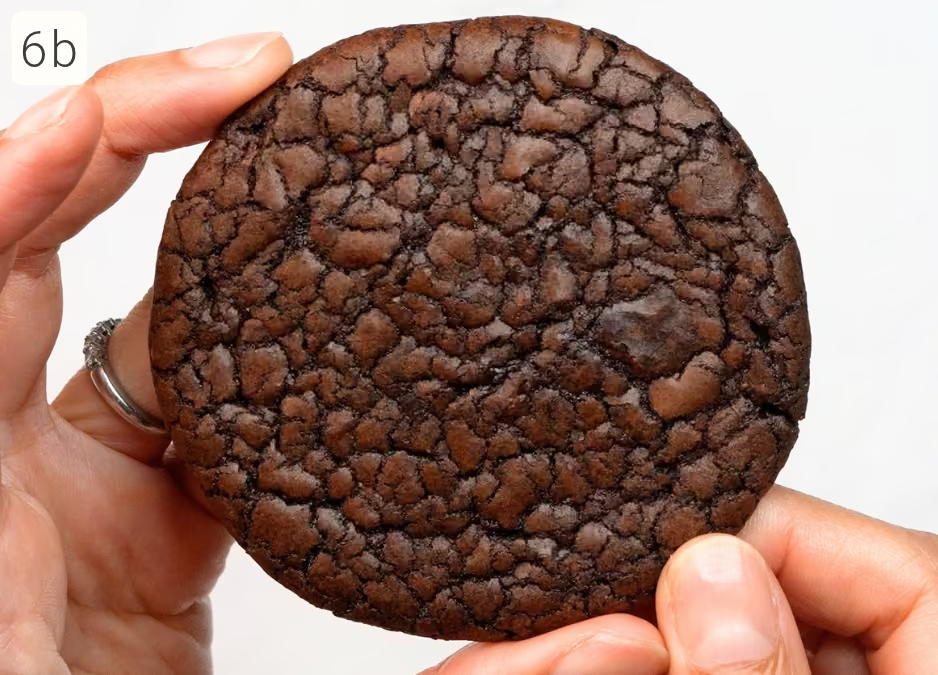
These cookies will firm up as they cool, yet retain a chewy, fudgy texture (6b). Store the leftover cookies in zip-top plastic bags.
Video
Honors Members Section
This extra material is accessible to Sugarologie Honors members.
Become a member to view extended research notes, technique analysis, and supplemental materials! Learn more about Sugarologie Honors here.
Already a member?
Like all my brownie recipes, this recipe relies on months of research into which ingredients and techniques affect brownie texture.
Three main factors go into achieving a crackly top on a brownie:
- The sugar must be predominantly sucrose (the exact percentage is not entirely clear to me yet);
- The sucrose must be dissolved (in any water-based ingredient, not necessarily eggs, although that is a popular one);
- The sucrose is at a 2X concentration to the water in the recipe (to saturate the water in sucrose).
If you want to learn more about how this research came about, I have an older video on this topic that you may enjoy! Here is the ad-free version for you:
Before starting the recipe, please read this!
Measure by weight, if possible.
Measuring by weight is the best way for you to replicate my recipes. I develop recipes using ingredients (even liquids) measured in grams, which is why you see them listed first in the recipe cards. For measurements under 5 grams, I will typically only list the volumetric measurements (teaspoons, etc.), as most home scales are not precise for such small weights.
In most cases, I have converted grams to volumetric measurements (aka US customary units) for bakers who prefer this method. However, the measurements are not as precise and may have awkward proportions. The recipes should still work, but for the ultimate precision, try to use weight.
This is the OXO scale I use daily. I also purchased this budget version of a good scale, which I keep at my Mom’s house for baking. If you’re interested in other tools I use for my baking, I’ve compiled a list here.
Use room temperature ingredients.
All my ingredients should be used at room temperature, or 65-75 °F/18-24 °C. I will always indicate if you need something outside this range. If no details are given, room temperature is the default.
Pay attention to the ingredient descriptions.
I try not to be brand-specific, but I will always note an interesting result from a type of ingredient, be it negative or positive.
A specific note regarding salt: I use Diamond Crystal Kosher salt for everything on this site except for frostings. In frostings, you want the salt to dissolve more easily, and kosher salt tends to leave granules behind. If you substitute table salt (more finely granulated) for recipes that list kosher salt, you must use half the volume indicated in my recipes.
Substitutions are hard.
That said, substitutions aren’t impossible but can be the toughest part of recipe development. Small swaps, like reduced-fat milk (2% fat) for whole milk (3.5% fat), usually work fine. However, bigger changes—such as replacing oil with applesauce or sour cream with Greek yogurt—can significantly impact texture and density.
Be wary of general, all-purpose substitutions in baking; I find that usually there is never a one size-fits-all solution. I carefully select ingredients for my recipes, so for the best results, start with the original recipe and modify with caution.
Read all the recipe instructions before beginning.
I’m in the “Pre-read the Chapter before Class Lecture” club... and I invite you to join! Baking new recipes can be intimidating, so let’s set you up for success. I want you to think about timeframes. Most fillings and frostings can be made ahead of time, and give you an extra day for mental space. Also, as you become a more proficient baker, you can anticipate and recognize steps. (“Oh, this has a meringue step, so I’ll need an extra clean bowl…” etc.) Ensure you go down the ingredient list and have everything at the right temperature.


Brownie Top Cookies
- 50 g (1 large) egg*
- 127 g (9 tablespoons) unsalted butter
- 47 g (9 tablespoons) Dutch-processed cocoa powder**
- 170 g (1 ½ cups) powdered sugar, sifted if lumpy
- ½ tsp salt (I use Diamond Crystal Kosher)
- 1 tsp vanilla extract
- 60g (½ cup) all-purpose flour, unbleached
- 50 g (1 large) egg*
- 127 g (9 tablespoons) unsalted butter
- 47 g (9 tablespoons) Dutch-processed cocoa powder**
- 170 g (1 ½ cups) powdered sugar, sifted if lumpy
- ½ tsp salt (I use Diamond Crystal Kosher)
- 1 tsp vanilla extract
- 60g (½ cup) all-purpose flour, unbleached
- Prep the egg, oven, and baking tray.
Place your egg in the hottest tap water. Do this a couple of times until the eggshell feels warm.
Arrange a rack in the center of your oven and preheat to 350°F/180°C.
Line two baking trays with parchment paper. - Melt the butter and mix it with the cocoa.
In a medium microwave-safe bowl, melt the unsalted butter until completely liquid and warm. Stir in the Dutch-processed cocoa powder until it forms a chocolate paste. Set aside for now. - Mix the warmed egg and powdered sugar.
In another large mixing bowl, add the warmed egg, powdered sugar, salt, and vanilla. Use a hand mixer and whisk on high speed for 2 minutes, until thicker and pale yellow. Scrape down the bowl once during this step. - Stir in the remaining ingredients.
Do not use a hand mixer for this step, as it will cause overmixing.
Using a spatula, stir in the melted butter/cocoa powder mixture until slightly thickened, glossy, and evenly colored.
Add your all-purpose flour and stir just until combined. - Scoop and bake for 10-12 minutes.
Use a 1 ½ (#40) scoop to portion brownie cookie mounds on the 2 trays about 2-3 inches apart.
Bake each tray for 10-12 minutes. You’ll know your cookies are done when they have spread into flat, thin circles and are slightly puffy with crackled tops. - Cool the cookies on the tray.
Let the cookies sit on the tray for 3-5 minutes before moving them to a cooling rack. Store the leftover cookies in zip-top plastic bags.

Recipe Card - Adriana's Notes
*The older version of this recipe used 3 egg yolks (about 60 grams) instead of one whole egg. You can still make this recipe with the yolks, and the resulting cookie will be chewier because the recipe has less overall water.
**Dutch-processed (European-style) cocoa is darker (sometimes with a reddish hue) compared to natural cocoa. This is due to alkalization, a process that neutralizes acidity and creates a smoother, mellower chocolate flavor that's essential for these cookies.
Also, try measuring the cocoa powder in grams. It’s a super fine powder, and it's easy to under- or over-measure with tablespoons. Measuring errors can make your cookies too tough or too loose, causing them to spread too much/little.


Got room for more dessert?
Subscribe to my Crumby Data newsletter! I share behind-the-scenes looks at recipe development, flavor testing for the Cakeculator, and life as a content creator. It’s free, lands in your inbox every few weeks, and you can unsubscribe anytime...no strings attached :)
Feel free to take a look at previous newsletters here!


